


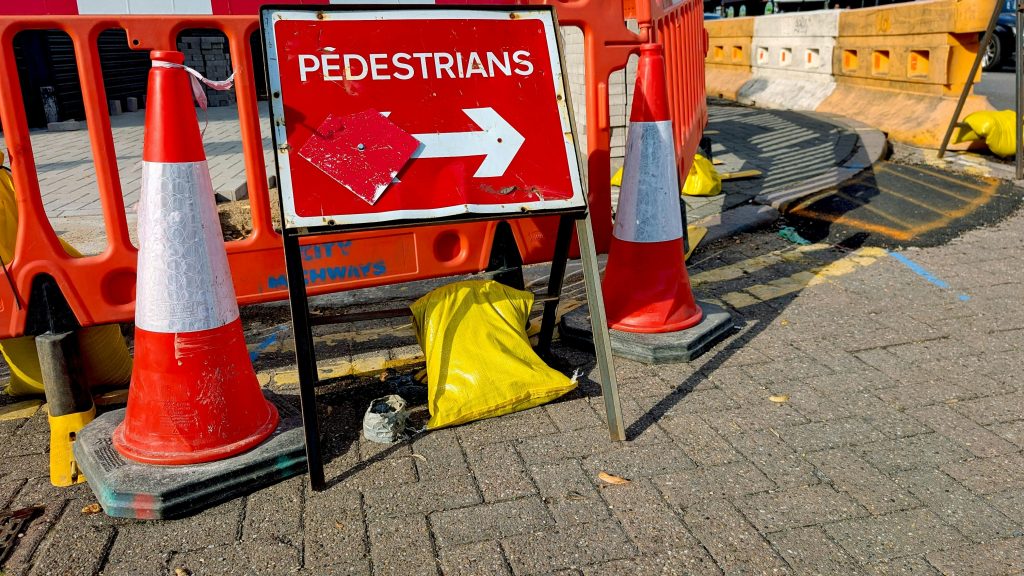
Construction‑zone crashes are common in Chicago. Lanes shift, cones move, visibility drops, and drivers are often confused. These conditions make collisions more likely—and make fault disputes more complicated. This guide explains how fault is determined in construction‑zone crashes, what evidence matters most, and how to protect your claim under Illinois law.
Quick answer: Who is at fault in a construction‑zone crash?
Fault depends on who acted unreasonably. A driver can be at fault for speeding, failing to yield, or ignoring signage. But in some cases, construction contractors or public agencies can share liability if the work zone was not properly marked or maintained. Each case turns on evidence.
Why construction‑zone crashes happen in Chicago
Construction zones create risk by changing normal traffic patterns. Common causes include:
- Sudden lane shifts or closures
- Confusing or missing signs
- Uneven pavement or road defects
- Reduced visibility from equipment or barriers
- Drivers speeding or tailgating through narrowed lanes
Common types of construction‑zone crashes
- Rear‑end collisions in stop‑and‑go traffic
- Sideswipe crashes during lane merges
- Single‑vehicle crashes from sudden drops or debris
- Intersection collisions where signals are temporarily altered
- Work‑zone collisions involving construction vehicles or equipment
How fault is determined in construction‑zone crashes
Fault depends on the facts. Investigators and insurers look at:
- Traffic control setup: Was signage visible and placed correctly?
- Driver behavior: Speed, following distance, lane changes.
- Road conditions: Uneven pavement, debris, or defects.
- Work‑zone compliance: Was the area maintained properly?
- Witness statements and video: Independent evidence of what happened.
Potentially responsible parties
1) Another driver
Most construction‑zone crashes still involve driver negligence: speeding, distraction, or failure to yield. If another driver caused your crash, they (and their insurer) are the primary target.
2) Construction companies or contractors
If a work zone was set up unsafely—missing signs, no proper channeling, or unsafe lane shifts—a contractor may share responsibility. This is especially important if multiple crashes happen at the same site.
3) Public agencies
City, county, or state agencies may be responsible if they failed to maintain the work zone or road surface. However, Illinois provides public entities with significant immunity for certain claims, and deadlines can be shorter. These cases require careful evaluation.
Illinois comparative fault in construction‑zone cases
Illinois uses a modified comparative fault system. If you are more than 50% at fault, you cannot recover damages. If you are 50% or less at fault, your recovery is reduced by your percentage of fault. Construction‑zone crashes often involve shared fault, especially if lane changes or speed were factors. Learn more: Illinois Comparative Fault Rule (51% Bar).
Evidence that matters most
- Photos and video of the work zone (signs, cones, lane markings).
- Police report noting construction conditions.
- Witness statements from drivers or workers.
- Dash‑cam footage showing lane shifts and signage.
- Traffic‑control plans (if available).
Work‑zone conditions can change quickly. Photograph the site immediately if safe. See How to Document a Car Accident for a Strong Claim.
Common injuries in construction‑zone crashes
- Whiplash and neck injuries
- Back injuries and herniated discs
- Head injuries and concussions
- Fractures and soft‑tissue injuries
Related reading: Whiplash After a Chicago Car Accident and Types of Back Injuries from Car Accidents.
Insurance tactics in work‑zone claims
Insurers often argue that drivers should have been extra cautious in construction zones. They may claim:
- You were speeding through a marked zone.
- You failed to merge safely.
- You ignored signage or cones.
Strong documentation is the best defense. See: Dealing With Insurance Adjusters: What to Say (and Not Say).
Claims against public entities (important deadlines)
Claims involving city or state agencies often have shorter deadlines. In Illinois, lawsuits against local public entities generally must be filed within one year. If a public agency might share fault, it’s critical to identify that early. See our deadline guide: Illinois Statute of Limitations for Car Accident Claims.
What to do after a construction‑zone crash
- Call 911 and report injuries or hazards.
- Photograph signs, cones, lane changes, and any defects.
- Get witness and worker names if possible.
- Seek medical care promptly.
- Preserve all documents and communications.
Frequently asked questions
Can a construction company be sued for a crash?
Yes, if the work zone was unsafe or improperly marked. These cases require evidence showing the hazard and how it contributed to the crash.
What if I was speeding through the work zone?
Speeding can reduce or bar recovery under Illinois’ comparative fault rule. The more your fault increases, the more your compensation decreases.
Do construction‑zone crashes take longer to resolve?
They can, especially if multiple parties are involved or liability is disputed. Strong documentation helps move claims forward faster.
What if the crash involved a construction vehicle?
Commercial vehicles may have additional insurance coverage. The investigation often focuses on the driver’s training, equipment safety, and work‑zone procedures.
Bottom line
Construction‑zone crashes are complex because conditions change quickly and responsibility can be shared. The key is to document the scene, identify all potentially responsible parties, and act fast—especially if a public entity may be involved. If you need guidance, it helps to get it early.
If you want to discuss your case or next steps, start here: Chicago Car Accident Lawyer.