
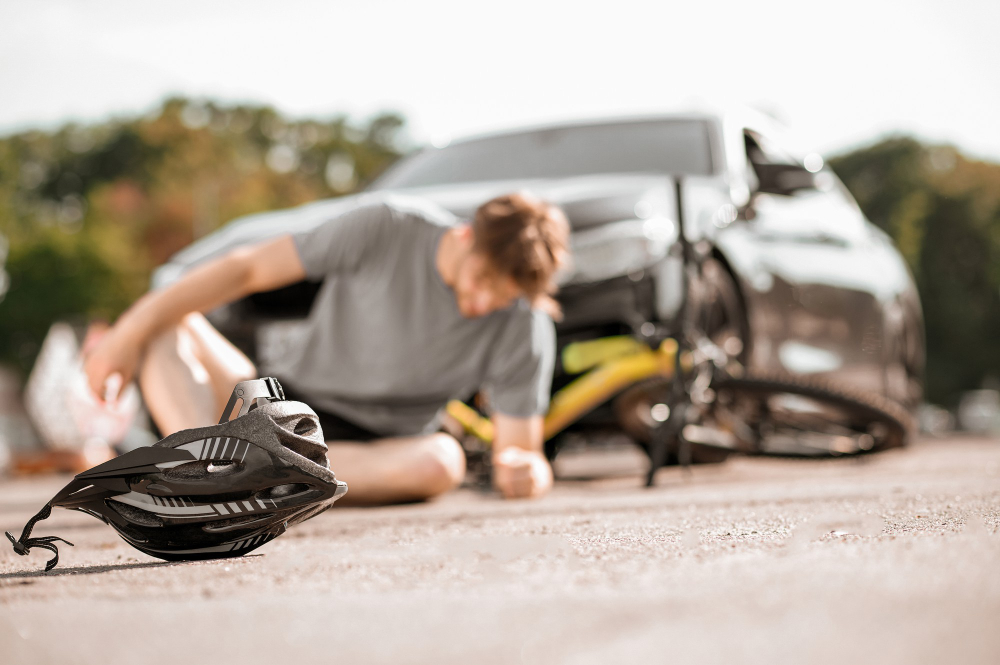
A driver clips a parked car on a side street in Logan Square, feels the bump, and keeps going. No note, no call, nothing. That’s a hit-and-run under Illinois law – and it doesn’t matter that nobody was hurt. The moment you leave the scene of an accident you caused without stopping and identifying yourself, you’ve crossed from a traffic mishap into a criminal offense.
Illinois law splits hit-and-run into two statutes that get confused constantly, even by people who should know better.
The Two Statutes That Actually Govern This
625 ILCS 5/11-401 covers accidents involving another vehicle, a person, or personal injury or death. It requires the driver to stop, exchange information (name, address, registration, and license on request), and render reasonable aid if anyone is hurt – including arranging transport to a hospital if that’s what’s needed. This is the statute that applies to almost every hit-and-run case involving a moving-vehicle collision.
625 ILCS 5/11-403 is the narrower cousin: striking an unattended vehicle or fixed property (a parked car, a fence, a mailbox) with nobody around to exchange information with. The duty here is to locate the owner if possible, or failing that, leave a written notice with your name, address, and registration in a conspicuous place, then notify police within a reasonable time.
Two different statutes, two different duties, but the same core idea: you don’t get to just drive away.
Penalties Scale Sharply With the Outcome
Property-only hit-and-run under 11-403 is typically a Class A misdemeanor – up to 364 days in jail and a $2,500 fine, plus mandatory license suspension. That’s the floor.
Once injury enters the picture under 11-401, the classification jumps. Leaving the scene of an accident involving injury is a Class 4 felony (1 to 3 years). If the injury is serious – a Type A injury under Illinois Department of Transportation crash-reporting standards, meaning severe disabling injury – or the case involves death, the offense escalates to a Class 1 felony, with a mandatory minimum one-year prison sentence and up to 15 years for the most severe outcomes. There is no probation-only path for a fatal hit-and-run under current Illinois sentencing law; a prison term is required.
Fines climb correspondingly, and every conviction carries a driver’s license revocation through the Illinois Secretary of State – not a suspension, a revocation, which means starting over with a formal reinstatement process rather than waiting out a fixed period.
How Cook County Decides What to Charge
Charging decisions in Cook County don’t happen automatically the moment police make an arrest. An assistant state’s attorney reviews the police report, any available footage, and the severity of the injury before deciding whether to charge the case as a felony or, in borderline property-damage cases, whether to charge at all versus refer it for a lesser traffic disposition. Prior record matters here – a first-time offender with a clean history and a genuinely marginal fact pattern (uncertain whether the driver actually felt the impact, for instance) gets evaluated differently than someone with a prior hit-and-run or DUI on record. None of that changes the statute itself, but it explains why two factually similar incidents can end up charged very differently.
Getting a License Back After Revocation
Revocation isn’t automatic-expiry like a suspension. After the statutory waiting period, the driver has to petition the Secretary of State’s Administrative Hearings section, and for a felony hit-and-run that petition typically requires a formal hearing rather than the informal review available for lesser offenses. Expect to show proof of insurance (usually an SR-22 filing at elevated rates for several years), evidence of any required treatment or counseling, and a clean record since the incident. Hearing officers weigh the severity of the underlying offense heavily – a fatal hit-and-run makes reinstatement materially harder to win than a property-damage case, and denial is common on a first petition.
If You’re the One Who Got Hit
Get the plate number if you possibly can. Vehicle color, make, approximate model year, direction of travel – all of it matters, because Chicago Police Department hit-and-run investigations lean heavily on whatever partial description the victim or witnesses can provide, cross-referenced against traffic camera footage where it exists along the route.
Call 911 if anyone is hurt. For property-only incidents, file a report at the nearest CPD district station or through the non-emergency line – you’ll need the report number for your insurance claim regardless of whether police ever identify the other driver.
Home and business security cameras have quietly become the single most useful evidence source in Chicago hit-and-run cases – more consistently useful than city traffic cameras, which cluster around major intersections and don’t cover most residential blocks or alleys. A Ring doorbell facing the street, a business’s exterior camera, even a neighbor’s dashcam parked nearby – canvassing the block for these within the first day or two, before footage rotates out of storage on cheaper systems, can make the difference between an identified driver and a cold case. Police will do some of this canvassing, but a homeowner or business willing to voluntarily share footage often responds faster to a direct knock than to a formal records request.
How the Insurance Claim Actually Works
Here’s the part most people don’t expect: if the driver is never found, your own uninsured motorist coverage is usually what pays. Illinois requires every auto policy to include UM coverage unless the policyholder explicitly rejects it in writing, and a hit-and-run driver is treated as an uninsured motorist for these purposes regardless of whether they actually carry insurance – because you can’t verify coverage for a driver who fled.
The catch: most Illinois UM policies require some form of independent corroboration before they’ll pay a hit-and-run claim – physical contact with your vehicle, an eyewitness, or police-documented evidence. A driver who simply claims “a car ran me off the road” with no contact and no witness faces a much tougher path than one with a dented bumper and a police report on file. If your insurer disputes the claim or won’t offer a reasonable number, most Illinois UM policies route the dispute to binding arbitration rather than court, under terms set in the policy itself – worth reading before you assume litigation is the only option.
UM claims can cover medical bills, lost wages, and pain and suffering, subject to your policy limits – and those limits matter more than people realize. Illinois’s statutory minimum UM coverage is $25,000 per person, which doesn’t go far against a serious injury. Anyone with the means to do so should carry considerably more, since it’s the only backstop against exactly this scenario.
One deadline trap catches people who assume they have the full two-year personal injury statute of limitations to deal with a UM claim: many Illinois auto policies contractually require prompt notice of a hit-and-run claim, sometimes within 30 to 90 days of the incident, separate from and much shorter than the lawsuit deadline. Missing that contractual notice window can jeopardize the claim even though the two-year statute hasn’t run out. Check your policy’s notice provision, or have someone check it for you, well before that shorter clock runs out.
Rideshare and Commercial Vehicle Complications
A hit-and-run involving an Uber, Lyft, or delivery driver adds a wrinkle most people don’t anticipate. If the app-based driver fled and can’t be identified, the same UM-claim path applies against the victim’s own policy – the rideshare company’s commercial coverage is irrelevant if the driver can’t be identified at all, since there’s no way to establish they were logged into the app at the time. If the fleeing driver is later identified as a rideshare or delivery driver who was on an active trip, a separate claim can potentially reach the platform’s commercial policy, which in Illinois typically carries much higher limits than a personal auto policy – but that avenue only opens once identification happens, and it’s a meaningfully different claim than a standard UM claim against your own insurer.
Pedestrians and Cyclists Face a Different Risk Profile
Chicago’s pedestrian and cyclist hit-and-run numbers run disproportionately high compared to vehicle-on-vehicle incidents, particularly along corridors without protected bike infrastructure. A driver who strikes a pedestrian and flees faces the same 11-401 felony exposure as one who hits another car, but the practical challenge for the victim is steeper: pedestrians and cyclists often can’t get a plate number in the seconds before or during impact, and the injuries tend to be more severe relative to the speed involved, since there’s no vehicle frame absorbing the impact.
For a pedestrian or cyclist victim, the UM claim mechanics work the same way as a vehicle occupant’s – but only if the victim (or a household member) actually has an auto policy with UM coverage to draw on. Someone who doesn’t own a car and gets struck while walking can end up with no UM policy of their own to file against, which is where a claim against a resident relative’s policy, or a case built entirely on whatever partial evidence exists, becomes the only path to recovery.
If You’re the One Being Accused
Don’t talk your way into a worse charge. The instinct to explain – “I didn’t think I hit anything,” “I was going to come back” – is exactly what gets used against a defendant later. Anything said to police before you have a lawyer present can and will end up in the charging documents.
A genuine defense usually turns on one of a few facts: the driver reasonably didn’t know contact occurred (a real issue in low-speed parking-lot contact or when a car’s own noise masks a minor collision), the driver stopped and exchanged information but the other party disputes it, or the driver left briefly to seek medical help for themselves or a passenger and returned – which Illinois courts have treated as distinguishable from fleeing outright, depending on the specific facts and how long the driver was actually gone. None of these are guaranteed defenses. They’re fact patterns that change how a prosecutor evaluates the case, and they need to be raised by a lawyer who can actually investigate what happened, not asserted on the spot to a responding officer.
A driver in a real Cook County case struck a cyclist at low speed, stopped, but drove off after a bystander started filming and shouting – later claiming he panicked rather than intended to flee. That single fact (he did stop initially) became the entire defense strategy, because 11-401’s duty is to stop and remain, and a driver who stops then leaves is in a legally different position than one who never stops at all. This is illustrative of how these cases actually get argued, not a claim about any specific case’s outcome.
Contrast that with a more common scenario: a driver backs into a parked car in a Wicker Park alley at night, feels nothing, and only learns about it the next morning from a neighbor’s security footage. Whether that’s chargeable as a knowing hit-and-run or a case where the driver genuinely never knew contact occurred often comes down to how hard the impact was and whether it’s plausible someone wouldn’t have felt or heard it – a factual question, not a legal one, and exactly the kind of thing a defense attorney investigates rather than assumes.
Why This Overlaps With a Personal Injury Claim, Not Just a Criminal Case
The criminal case against a hit-and-run driver, if they’re caught, runs on its own track through the Cook County State’s Attorney’s office. It doesn’t pay your medical bills. A separate civil claim – against the driver if identified, or against your own UM carrier if not – is what actually recovers compensation, and it runs on Illinois’s standard two-year statute of limitations for personal injury under 735 ILCS 5/13-202.
A criminal conviction, if one happens, can help the civil case – it’s evidence of fault that doesn’t need to be relitigated from scratch. But civil claims routinely settle or proceed well before any criminal case resolves, and plenty of hit-and-run civil claims go forward against unidentified drivers through UM coverage with no criminal case ever filed at all.
There’s also a punitive-damages angle worth knowing about. Illinois generally doesn’t allow punitive damages in ordinary negligence cases, but fleeing the scene can itself be evidence of the kind of willful and wanton conduct that opens the door to them in the civil case against an identified hit-and-run driver – on top of, not instead of, standard compensatory damages. It’s a fact-specific argument, not a guaranteed add-on, but it’s part of why identifying the driver matters even when UM coverage would otherwise cover the loss.
Frequently Asked Questions
Do I have to report a hit-and-run even if the damage is minor?
Yes. Illinois law doesn’t set a damage-dollar threshold for the duty to report under 11-403 – any accident involving vehicle or property damage requires notification, even a scraped bumper.
Can I still recover damages if I was partly at fault for the accident?
Yes, under Illinois’s modified comparative negligence rule (735 ILCS 5/2-1116), as long as you’re found less than 51% at fault, your recovery is reduced by your percentage of fault rather than eliminated.
What if the hit-and-run driver is a family member or someone I know?
The same statutes apply regardless of any relationship between the parties – Illinois law doesn’t carve out an exception for accidents involving people who know each other, and the same reporting duty exists either way.
Can police reopen a hit-and-run investigation after months with no leads?
Yes, particularly if new evidence surfaces – a body shop reporting suspicious repair work, a tip, or footage that wasn’t initially reviewed. There’s no short statute of limitations forcing police to close a case quickly, though practically speaking, the odds of identification drop the longer a case sits without new leads.
What happens if the driver fled Illinois entirely, or is later found to live in another state?
An identified out-of-state driver can still be prosecuted through extradition in serious cases, though prosecutors weigh the cost and likelihood of a felony extradition against the severity of the offense. Civilly, a driver with Illinois-registered insurance (or coverage that follows the vehicle) can typically still be pursued regardless of where they currently live, since Illinois courts generally retain jurisdiction over a crash that happened within the state.
Chicago’s traffic-camera network covers a growing share of major intersections, but plenty of side-street and residential collisions have no camera coverage at all. That gap is exactly why witness information, dashcam footage, and a fast police report matter more in a hit-and-run than in an ordinary two-car crash where both drivers are still on scene.
Top 5 Car Accident Lawyers in Chicago
What Does Dreaming Of Car Accident Mean?
Disclaimer: This page is for informational purposes only, is not legal advice, and does not create an attorney-client relationship.