

Chicago multi-vehicle pileups create competing fault stories fast, especially when one impact triggers several others. Preserve photos, witness names, repair records, and treatment notes early so insurers cannot shift blame.
For related Chicago crash patterns, review lane-change crash claims and highway collision risks.
Chicago Multi-Vehicle Car Crash Claims
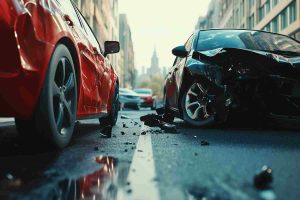
Not all crashes are the same. Multi-vehicle collisions, often called chain-reaction crashes or pileups, commonly happen when one negligent action sparks a series of rapid impacts. A speeding driver rear-ends someone during rush hour. A vehicle cuts across multiple lanes without signaling. A distracted driver slams the brakes too late. Snow or fog reduces visibility on the Dan Ryan or Kennedy Expressway. An impaired driver drifts into another lane.
Within seconds, other drivers have no time or space to react. What starts as one mistake becomes a multi-car disaster. To understand how merging or lane errors contribute to these events, see Common Types of Car Accidents in Chicago.
Why Fault Gets Complicated Fast
After a typical two-car crash, liability is usually clear. In a multi-vehicle accident, everyone blames someone else. The car behind me pushed me into you. The car in front stopped suddenly. Someone cut me off and I had no choice. My brakes did not respond. Even the police may need hours to piece everything together, and the report they file is a starting point for your claim, not the final word on fault.
Multiple Points of Impact
Your vehicle might be hit from one side, then pushed into another car, and then struck again from behind. That makes it difficult to prove which driver caused which injury, which impact was the primary cause, and whether you share any responsibility at all.
Multiple Insurance Companies
Each insurer has one priority: avoid paying. They may claim you were following too closely, that you were speeding, that you made an unsafe stop, or that your injuries came from another impact entirely. This is why victims of pileups should never face insurance companies alone. If your collision happened on a busy Chicago expressway, your experience likely resembles the situations described in Highway Crashes in Chicago.
How Illinois Law Actually Sorts Out Fault in a Pileup
Illinois uses a modified comparative negligence rule under 735 ILCS 5/2-1116. You can recover damages as long as you are not more than 50% at fault for the crash, but your award gets reduced by your own percentage of fault. In a two-car crash that math is simple. In a five-car pileup, a jury or insurance adjuster has to divide fault among every driver involved, and your percentage can shift depending on which impact actually caused your injury.
Say a jury finds the case worth $400,000 in damages, and it allocates fault as 40% to the driver who caused the initial rear-end collision, 35% to a second driver who was following too closely and struck the first car again, and 25% to you for a delayed brake response. Your own fault (25%) is under the 50% bar, so you still recover, but your award drops from $400,000 to $300,000 to reflect your share.
Multi-vehicle cases also raise a second Illinois rule that rarely comes up in a simple two-car crash: joint and several liability under 735 ILCS 5/2-1117. If a defendant is found 25% or more at fault, that defendant can be held responsible for the full amount of your medical expenses, even if their individual share of fault was less than the total judgment. Defendants found less than 25% at fault are only liable for their own proportionate share. In a pileup with several drivers of varying fault, this rule often determines which insurance policy actually pays first, and how much you can realistically collect if one driver is uninsured or underinsured.
One more wrinkle worth knowing before you sign anything: settling with one driver in a pileup does not automatically end your claim against the others, but the wording of that settlement matters. A poorly drafted release can be read to cover more than the one driver’s insurer intended, potentially reducing what you can later recover from a second or third at-fault party. This is a common trap in multi-vehicle cases specifically, since a single-driver crash never raises the question at all.
Common Causes of Chicago Pileups
While every case is different, certain patterns show up again and again in Chicago-area multi-vehicle crashes. Chicago’s expressways often move fast one minute and stand still the next, and sudden speed changes cause chain-reaction rear-end collisions. Unsafe merging without signaling or checking blind spots can instantly disrupt traffic flow, which is the same issue explained in What to Do After a Car Accident in Chicago. Even a two-second glance at a phone can trigger a multi-car pileup, and snow, black ice, rain, and fog reduce traction and visibility on elevated sections and bridge decks well before the rest of the roadway ices over.
Alcohol and drugs slow reaction times and cause dangerous drifting. Drivers who follow too closely cannot stop in time when traffic slows, a violation of the assured-clear-distance rule under 625 ILCS 5/11-710, which requires drivers to leave enough space to stop safely given road and traffic conditions. Commercial trucks need far more distance to stop than passenger vehicles, and one mistake by a truck driver can demolish multiple vehicles at once.
Injuries Multi-Vehicle Crashes Tend to Cause
Multi-vehicle accidents often cause more severe injuries than single-impact crashes because the body may absorb several forces from different directions in rapid succession. Victims often experience neck and spine injuries, traumatic brain injuries, broken bones, shoulder and knee injuries, seatbelt trauma, internal bleeding, burn injuries from airbag deployment, and emotional distress that can develop into anxiety or PTSD after the fact.
For many victims, these collisions worsen old injuries or conditions, which is why the topic in Compensation for Pre-Existing Conditions After a Car Accident is extremely important to understand. Insurers routinely try to attribute a worsened old injury to something other than the crash, and a multi-impact collision gives them more impacts to point to.
Who Can Be Held Responsible
Liability in pileups is rarely limited to one person. The driver who initiated the first impact may be the primary at-fault party, but drivers who failed to react reasonably after that first impact, whether through speeding, distraction, or following too closely, can share responsibility. Commercial trucks or rideshare vehicles may carry liability if their actions contributed to the collision, and a hit-and-run driver who triggered or worsened your crash raises the issues covered in Hit and Run Car Accidents in Chicago. Poor road maintenance, missing signage, or city negligence can also contribute, and in rarer cases a vehicle manufacturer may bear responsibility for faulty brakes, defective steering, or a malfunctioning safety system.
Sorting out which of these applies to your crash usually requires accident reconstruction experts, event data recorder downloads (the “black box” most modern cars carry), witness testimony, dashcam or traffic camera footage, police reports, and a detailed vehicle damage analysis showing the sequence and direction of impacts.
A Hypothetical: Three Cars, Three Insurers, One Claim
Consider a hypothetical illustrating how this plays out. A driver slows for congestion on the Kennedy. The car behind fails to leave assured clear distance and rear-ends them, pushing their car into a third vehicle stopped ahead. The middle driver now has injuries from two separate impacts and is dealing with two insurance companies, each pointing at the other driver’s policy. Under Illinois’s comparative fault and joint-and-several rules, the middle driver’s own conduct (if any) gets weighed against both other drivers, and if the rear driver is found 25% or more at fault, that driver’s insurer can be pursued for the full medical-expense portion of the claim rather than just a prorated share. This is a general illustration of how the rules interact, not a description of a specific past case.
Why Multi-Vehicle Claims Take Longer Than a Standard Fender-Bender
A two-car claim usually involves one insurer on each side. A pileup can mean three, four, or more carriers, each running its own investigation and each reluctant to move until the others show their hand. Subrogation between insurers, where one carrier that pays a claim tries to recover money from another driver’s insurer, can add months to a case even after your own treatment is finished. This is one of the main reasons pileup claims should be handled by someone tracking every carrier’s position at once, not negotiated one conversation at a time.
It also means the order in which you deal with each insurer can matter more than it would in a simple crash. An early, favorable-sounding offer from one carrier can look attractive precisely because that carrier wants to lock in a low number before the full extent of your injuries, or the other drivers’ share of fault, becomes clear. Waiting for a complete medical picture before accepting any offer is almost always the right call in a multi-vehicle case, even when it feels slower than you would like.
Evidence That Disappears Fast After a Pileup
Chicago’s expressway camera network, run jointly by IDOT and the Illinois Tollway, exists mainly for congestion monitoring rather than permanent recordkeeping, and footage from any given camera typically sits on the system for only a limited window before it gets overwritten. How long that window actually is varies by agency and camera, so it should never be assumed to be long enough. The same is true for a nearby business’s private security footage, which many owners overwrite automatically within days unless someone specifically asks them to preserve it. A written preservation request sent quickly to the relevant camera operators is often the difference between having footage that shows the true sequence of impacts and having nothing but conflicting driver accounts.
Vehicle event data recorders raise a similar timing problem. Modern EDRs typically only store crash data for a limited number of ignition cycles before it can be overwritten by later driving, so a car that gets repaired and driven again before the data is downloaded may lose the very information that would have shown who braked, who accelerated, and in what order.
Deadlines You Cannot Miss
Illinois gives most car accident victims two years from the date of the crash to file a personal injury lawsuit under 735 ILCS 5/13-202. That deadline runs separately against each defendant, but missing it against even one driver in a multi-vehicle case can eliminate your ability to recover from that party entirely, even if you settle with the others in time. If a government vehicle, such as a CTA bus or a Chicago Department of Streets and Sanitation truck, is one of the vehicles involved, a separate one-year notice requirement can apply and should be checked immediately rather than assumed away.
What You May Be Entitled To Recover
Victims of multi-vehicle accidents often face significant financial and emotional burdens. You may be entitled to compensation for medical bills, future medical care, lost wages, reduced earning capacity, pain and suffering, emotional trauma, property damage, and loss of enjoyment of life. If your injuries caused you to miss work, see Can I Be Reimbursed for Lost Wages After a Car Accident in Chicago.
What to Do in the Days After a Pileup
Your actions after the crash can affect your entire case. Seek medical attention immediately, even if your symptoms feel minor at first. Get a copy of the police report once it becomes available. Take photos and videos of all vehicles involved, not just your own, since the damage pattern on other cars can help establish the sequence of impacts. Do not admit fault to anyone at the scene, and avoid giving recorded statements to any insurer, including your own, until you understand how the fault picture is likely to shake out. Track all symptoms as they develop, even ones that seem minor at first, and preserve damaged property as evidence rather than repairing or discarding it early.
Frequently Asked Questions
Do I still have a claim if I was partly at fault for the pileup?
Possibly. Illinois’s modified comparative negligence rule lets you recover as long as your own fault is 50% or less, though your award is reduced by your percentage of fault.
Which insurance company pays first in a multi-car pileup?
There is no fixed order. It depends on each driver’s percentage of fault and, under Illinois’s joint-and-several rule, whether any defendant is 25% or more at fault for the crash. That determination often takes time and negotiation between multiple carriers.
What if one of the drivers in the pileup has no insurance?
Your own uninsured or underinsured motorist coverage may apply, depending on your policy. This is a separate claim from the liability claim against the at-fault drivers and has its own notice requirements.
How long do I have to file a lawsuit after a Chicago pileup?
Generally two years from the date of the crash under 735 ILCS 5/13-202, though a shorter one-year notice period can apply if a government-owned vehicle was involved.
Should I give a recorded statement to the other driver’s insurance company?
Not without legal advice first. In a multi-vehicle crash, an early recorded statement can be used to shift fault onto you before the full sequence of impacts is even established.
Can I be blamed for a crash I was pushed into?
Not automatically. If you were struck from behind and pushed into the vehicle ahead of you, that impact was caused by the driver behind you, not by any failure on your part. Insurers sometimes try to blur this distinction in a chain-reaction crash, which is exactly why documenting the direction and order of impacts matters so much.
What if the police report gets the fault order wrong?
A police report is evidence, not a verdict. Officers often arrive after the vehicles have already been moved and have to reconstruct the sequence from damage and witness statements, sometimes incorrectly. A report that gets the order wrong can be challenged with independent evidence such as camera footage, EDR data, or an accident reconstruction expert.
You Should Contact a Chicago Multi-Vehicle Accident Lawyer If:
- Several drivers or insurers are blaming each other
- You are injured or experiencing delayed symptoms
- A commercial truck or rideshare vehicle is involved
- You suspect a hit-and-run driver contributed
- You received a low settlement offer
- You feel overwhelmed or unsure what to do next
A multi-vehicle crash can leave your life in pieces: physically, emotionally, and financially. But you do not have to rebuild it alone. Phillips Law Offices is here to guide you, protect you, and fight for the compensation you deserve. When you hire our firm, you get a legal team with over 80 years of combined experience fighting for injured Chicago residents, from investigating the crash and identifying every liable party to negotiating with each insurer and, if necessary, taking your case to trial. To learn more about the importance of legal representation, see Why Hiring a Chicago Car Accident Lawyer Matters.
Contact us today (312) 346-4262 for a free, no obligation consultation and get the support you need to move forward with confidence.
More Illinois Injury Guides
- Parking Lot Accidents in Chicago: Liability, Injuries, and Claims
- Chicago Passenger Negligence Lawyer | Your Rights
- Rear-End Car Crashes in Chicago: Fault, Injuries, and Claims
- Chicago Car Accident Lawyer Resources and Guides
How shared blame changes the payout is explained in Illinois’ 51% bar rule.