 Written by
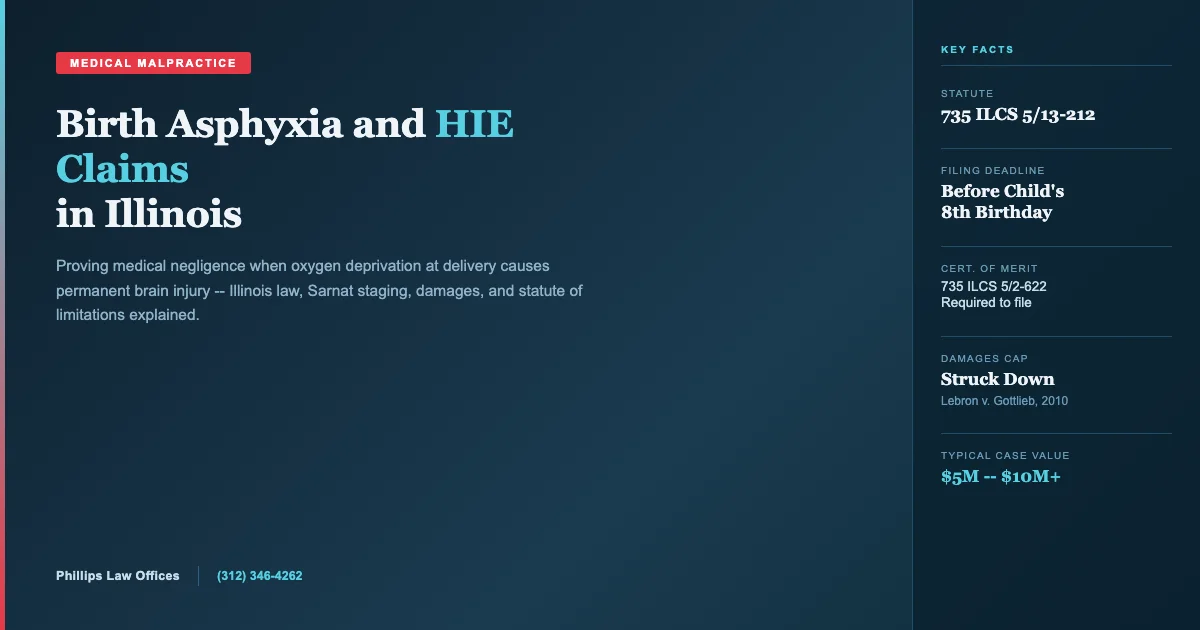
 Short answer: Birth asphyxia means a newborn’s brain was deprived of oxygen before, during, or shortly after delivery. When that oxygen deprivation is severe enough to cause brain damage, doctors call it hypoxic-ischemic encephalopathy (HIE). Illinois law allows families to pursue medical malpractice claims when a delivery team’s negligence — failing to monitor fetal heart tracings, delaying an emergency C-section, or mismanaging labor complications — caused or worsened the oxygen deprivation. These cases are governed by the Illinois Medical Malpractice Statute of Limitations (735 ILCS 5/13-212) and require a certificate of merit from a qualified medical professional under 735 ILCS 5/2-622.
I have worked on birth injury cases for many years, and I will tell you directly: HIE litigation is among the most fact-intensive work a personal injury attorney does in Illinois. The medicine is complex, the records are voluminous, and the defense teams hired by hospitals and obstetricians are well-funded and experienced. Families who come to our office in the weeks or months after a traumatic birth are often exhausted, grieving, and uncertain whether anything went wrong legally — or whether it was simply an unavoidable tragedy. The first job is always to figure out the truth, and that requires a thorough review of every fetal heart rate strip, nursing note, and physician order from the delivery.
What Is Birth Asphyxia and HIE
Birth asphyxia is the condition of insufficient oxygen supply to a newborn around the time of birth. The oxygen deprivation may occur in the womb (antepartum), during labor and delivery (intrapartum), or in the immediate newborn period (neonatal). When the brain is deprived of oxygen, neurons begin dying within minutes. Hypoxic-ischemic encephalopathy is the specific diagnosis describing brain injury caused by both lack of oxygen (hypoxia) and reduced blood flow (ischemia).
HIE is graded by severity using the Sarnat staging system, which helps clinicians assess the extent of injury and guide treatment decisions, including therapeutic hypothermia (cooling therapy).
| Sarnat Stage | Severity | Clinical Features | Typical Outcomes |
|---|---|---|---|
| Stage I (Mild) | Mild HIE | Hyperalertness, jitteriness, feeding difficulties | Usually full recovery within days |
| Stage II (Moderate) | Moderate HIE | Lethargy, hypotonia, seizures, abnormal reflexes | Variable — some normal, some with deficits |
| Stage III (Severe) | Severe HIE | Coma, no spontaneous movement, severe seizures, multi-organ failure | Death or severe permanent disability common |
Mild HIE may resolve without permanent consequences. Moderate and severe HIE frequently result in cerebral palsy, intellectual disability, epilepsy, vision and hearing impairment, and feeding disorders that require lifelong care. Therapeutic hypothermia — cooling the infant’s body temperature for 72 hours — can reduce brain injury if started within six hours of birth, which makes early recognition critical and gives the delivery team a narrow window to act.
Medical Negligence That Causes HIE
Not every case of birth asphyxia involves negligence. Some oxygen deprivation events are genuinely unforeseeable and unpreventable. However, a significant percentage of HIE cases result from failures in monitoring or management that a competent obstetric team would have caught and corrected in time. Common forms of negligence include:
- Failure to recognize and respond to non-reassuring fetal heart rate tracings indicating fetal distress
- Delay in performing an emergency cesarean section when vaginal delivery is unsafe
- Improper use of Pitocin (oxytocin) causing hyperstimulation and sustained uterine contractions
- Failure to manage umbilical cord prolapse or cord compression
- Mismanagement of placental abruption or uterine rupture
- Failure to recognize and treat maternal conditions such as preeclampsia or chorioamnionitis that compromise fetal oxygenation
- Shoulder dystocia mismanagement leading to prolonged delivery and asphyxia
- Inadequate staffing or communication failures between nursing and obstetric staff
Proving the Standard of Care Was Breached
Illinois medical malpractice law requires proving four elements: (1) a physician-patient relationship existed, establishing a duty of care; (2) the defendant deviated from the accepted standard of care; (3) that deviation caused the injury; and (4) the injury resulted in damages. In birth injury cases, causation is often the most contested issue because the defense will argue that the outcome would have been the same regardless of the physician’s actions, or that the injury occurred before delivery began.
Before filing suit, Illinois requires the plaintiff to attach a certificate of merit signed by a qualified health professional stating that after reviewing the medical records, there is a reasonable and meritorious cause for litigation (735 ILCS 5/2-622). Failing to attach this certificate is grounds for dismissal. Expert witnesses — typically a board-certified obstetrician and a neonatologist or pediatric neurologist — will testify at trial about what the records show, what a competent provider would have done differently, and how those actions would have prevented or reduced the HIE injury.
In severe HIE cases that result in permanent disability, a life care plan prepared by a certified life care planner is essential. These plans project the cost of all future medical treatment, therapies, assistive devices, home modifications, and attendant care over the child’s expected lifetime. In cases involving moderate to severe cerebral palsy, lifetime care costs routinely exceed $5 million to $10 million. Juries need to see the full economic picture, not just the hospital bills from the first weeks of life.
Illinois Birth Injury Statute of Limitations
Illinois applies a specialized statute of limitations to birth injury cases. Under 735 ILCS 5/13-212(b), a medical malpractice claim on behalf of a person under 18 must be filed before the person’s eighth birthday. This gives families significantly more time than the standard two-year medical malpractice period — but eight years passes faster than families expect when they are consumed with caring for a child who has significant medical needs. There is also an overall outer limit: no action may be brought more than eight years after the act or omission alleged to be the basis for the claim, regardless of the minor’s age at discovery.
Do not assume you have unlimited time. Medical records must be preserved, witnesses must be located, and expert witnesses must be retained and given adequate time to review the records before preparing their opinions. Waiting until close to the deadline dramatically increases costs and risk.
Damages in HIE Cases
Damages in a successful Illinois HIE claim can include past and future medical expenses, costs of rehabilitative therapies (physical, occupational, speech, and feeding therapies), special education costs, home modifications and adaptive equipment, attendant care and lost parental wages for caregiving, pain and suffering, and loss of normal life. Illinois does not cap compensatory damages in medical malpractice cases — the Illinois Supreme Court struck down the statutory cap in Lebron v. Gottlieb Memorial Hospital (2010). This means juries are free to award full compensation based on the evidence presented.
Wrongful death and survival claims are available if the infant dies as a result of the HIE. In those cases, damages include pre-death pain and suffering, funeral and burial expenses, and the grief and loss of society experienced by the parents.
Frequently Asked Questions
What causes birth asphyxia?
Birth asphyxia is caused by any event that interrupts or reduces the oxygen supply to the fetus or newborn. Common causes include cord prolapse or compression, placental abruption, uterine rupture, prolonged or obstructed labor, maternal hemorrhage, and severe maternal hypotension. When these events occur, the delivery team must recognize the signs quickly — typically visible on fetal heart rate monitoring — and take corrective action.
Is HIE always medical negligence?
No. Some cases of HIE involve events that occur before labor begins or that are genuinely unpreventable despite proper monitoring and response. However, a substantial percentage of HIE cases involve delays or failures in responding to warning signs that were visible on fetal monitoring equipment. Whether negligence occurred requires careful review of the complete medical records by qualified experts. Do not assume negligence, but also do not assume there was none without having a professional review the records.
How long do I have to file in Illinois?
Under 735 ILCS 5/13-212(b), a birth injury claim on behalf of a minor must be filed before the child turns eight years old. The eight-year outer limit from the date of the act or omission also applies. While this is longer than the standard two-year medical malpractice deadline, it is not unlimited time. Starting the process early gives attorneys adequate time to gather records, retain experts, and build the strongest possible case.
What are these cases worth?
The value of an HIE case depends on the severity of the injury and the projected lifetime costs of care. Mild HIE cases that resolve without permanent injury may settle for smaller amounts. Severe HIE resulting in permanent cerebral palsy, cognitive impairment, or the need for lifetime attendant care can produce verdicts and settlements in the millions, sometimes exceeding $10 million when all future care costs are properly documented through a life care plan and economic analysis.
Can I sue both the OB and the hospital?
Yes. Illinois allows claims against multiple defendants whose negligence contributed to the same injury. In birth injury cases, potential defendants can include the delivering obstetrician or midwife, the nursing staff responsible for monitoring fetal heart tracings, the hospital as an employer (under respondeat superior), and in some cases, anesthesiology or other specialty providers involved in the delivery. Each defendant’s share of liability is determined based on fault allocation principles under Illinois law.
Authoritative Sources
- 735 ILCS 5/13-212 — Illinois medical malpractice statute of limitations, including the minor’s extended deadline
- 735 ILCS 5/2-622 — Illinois certificate of merit requirement for medical malpractice actions
- American Academy of Pediatrics (AAP) / American College of Obstetricians and Gynecologists — Neonatal Encephalopathy and Neurologic Outcome guidelines (2nd edition)
- Lebron v. Gottlieb Memorial Hospital, 237 Ill. 2d 217 (2010) — Illinois Supreme Court ruling striking down the medical malpractice damages cap
Related Illinois Injury Guides
- Birth Injury vs. Birth Defect in Illinois — Key Legal Differences
- Failure to Diagnose Cancer in Illinois — Malpractice Claims
- Wrongful Death Damages Distribution in Illinois
- Illinois birth injury specialists
If your child suffered a birth injury that may have been caused by a delivery team’s negligence, contact Phillips Law Offices at (312) 346-4262 for a free consultation. We review medical records confidentially and work with leading experts to evaluate whether a claim exists.