
Category: Property Hazard Claims
-
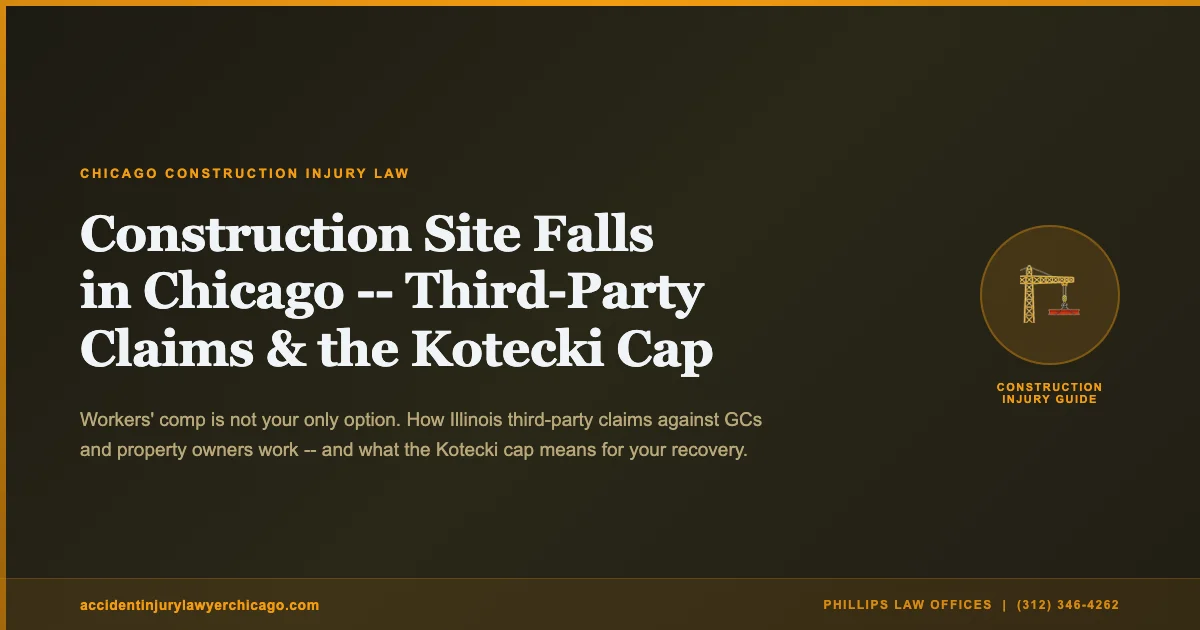
Construction Site Fall Injuries in Chicago — Third-Party Claims and the Kotecki Cap
If you were injured in a fall on a Chicago construction site, you likely have two separate tracks of recovery available, not one. Key claim steps…
-
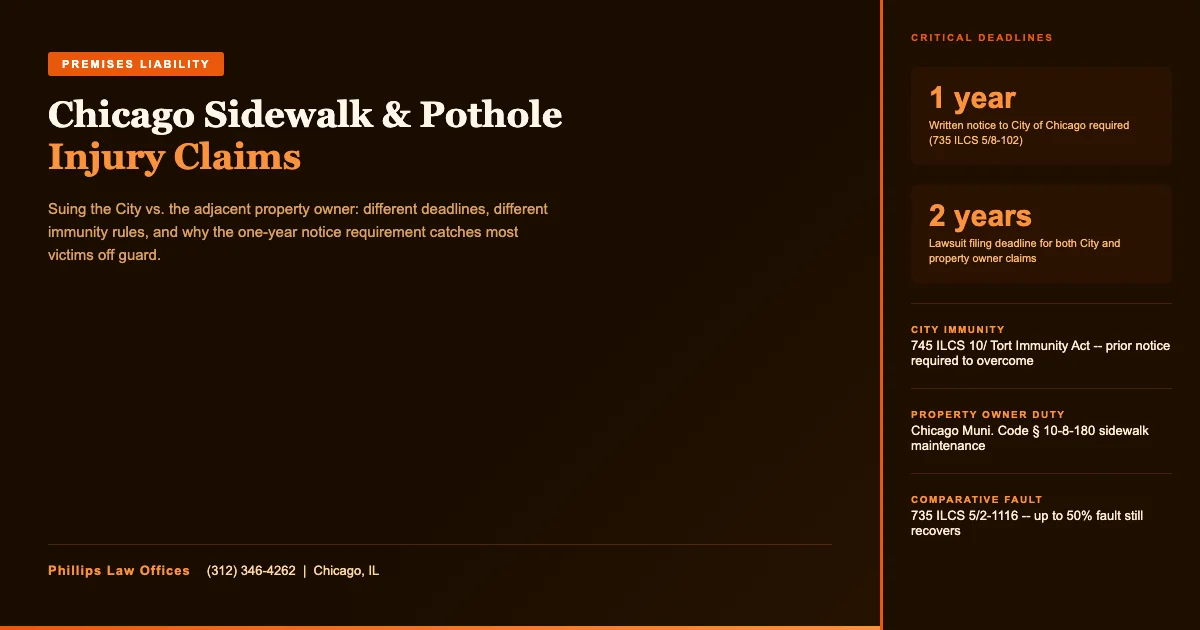
Chicago Sidewalk and Pothole Injury Claims — Suing the City and Property Owners
If you were injured on a broken Chicago sidewalk or hit a pothole that damaged your car or caused an accident, you may have a claim…
-
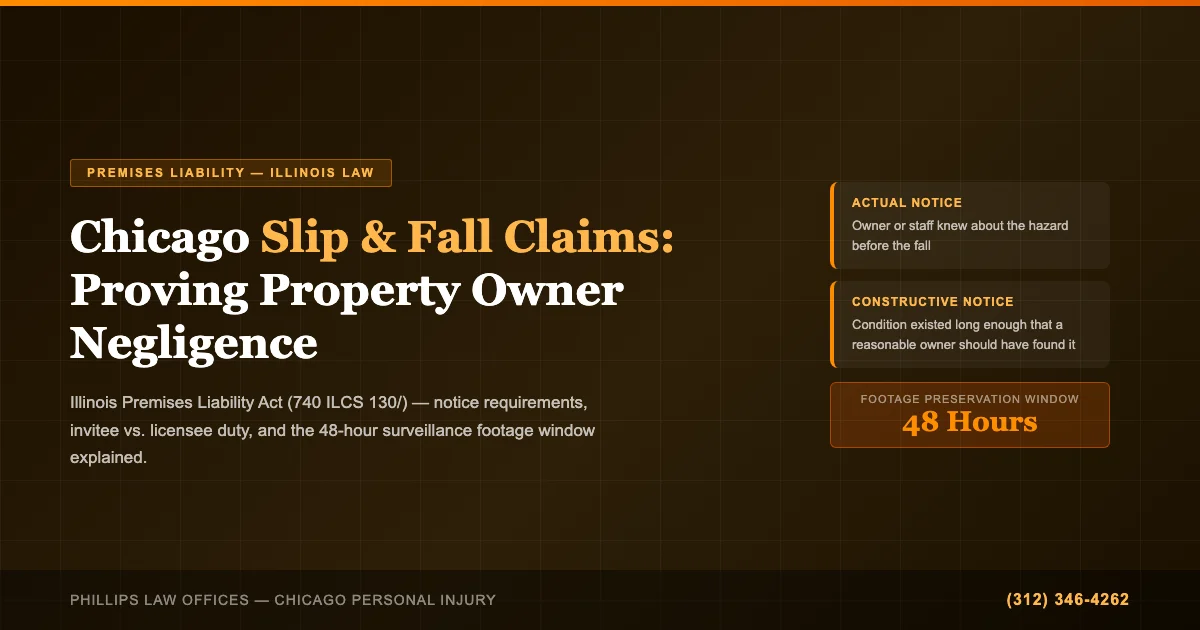
Chicago Slip and Fall Claims: Proving Property Owner Negligence
Chicago slip and fall claims require proving that a property owner knew or should have known about a hazardous condition and failed to fix it. Illinois…
-

Elevator and Escalator Accident Claims in Chicago
Elevator and escalator injuries in Chicago involve building owners, maintenance contractors, and in some cases the manufacturer under product liability law. The Illinois Elevator Safety Act…
-

Swimming Pool Drowning and Injury Claims in Chicago
Swimming pool drowning and near-drowning cases in Illinois involve hotel pools, condominium associations, park district facilities, and private homeowners. The duty of care depends on who…
-

Stairway and Staircase Fall Claims in Chicago Buildings
Stairway falls in Chicago apartment buildings, offices, and commercial properties are among the most severe premises liability cases. Proving liability requires showing the property owner knew…
-
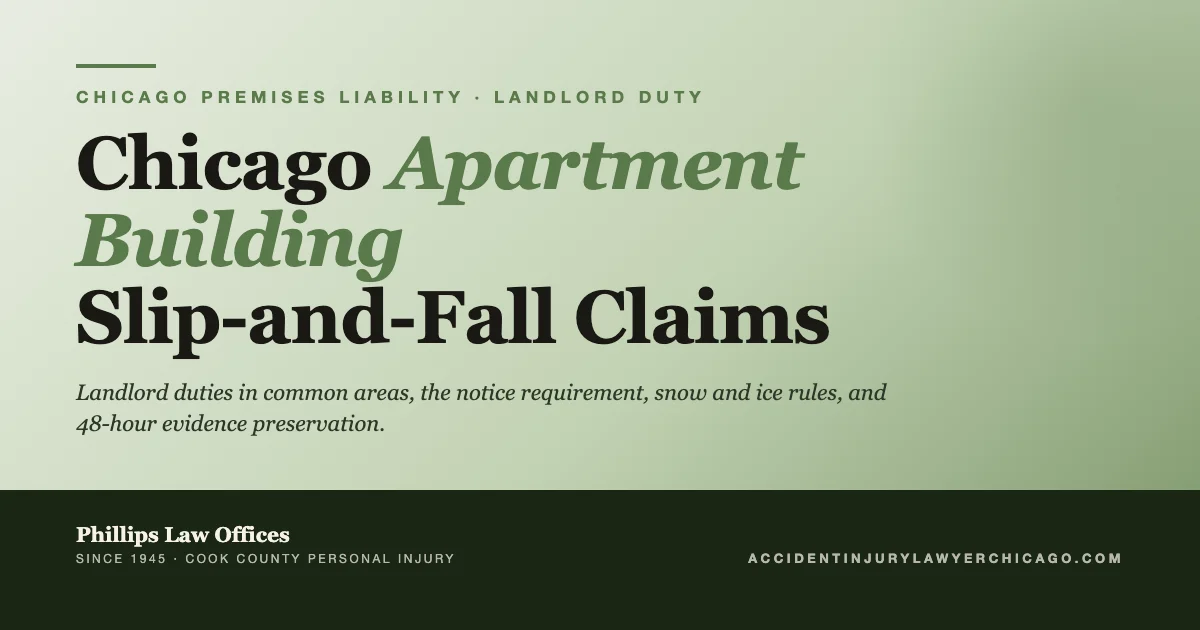
Chicago Apartment Building Slip-and-Fall Claims: Landlord Liability
Attorney guide to Chicago apartment building slip-and-fall claims: landlord duty in common areas, the notice requirement, Illinois snow and ice rules, and 48-hour evidence preservation.