
Category: Medical Malpractice
-
Surgical Errors in Illinois — Malpractice Claims Beyond Never-Events
Not every surgical mistake qualifies as a “never event,” but that does not mean you have no case. Free consultation with a Chicago injury lawyer.
-
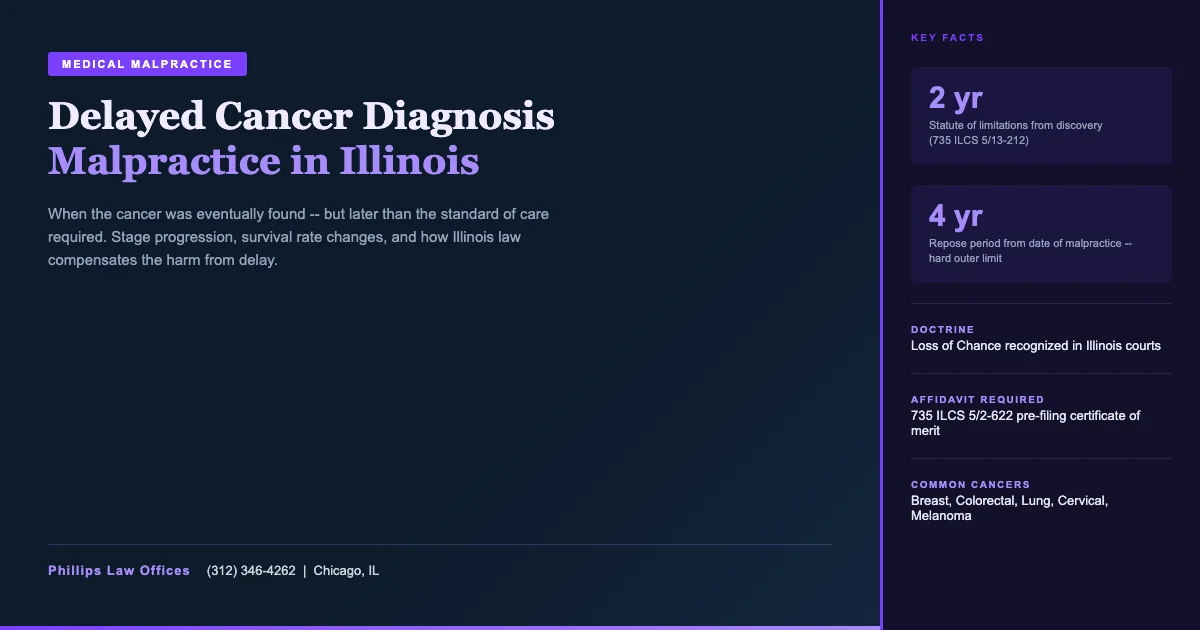
Delayed Cancer Diagnosis Malpractice in Illinois — When Late Detection Causes Harm
Yes, a delayed cancer diagnosis can be medical malpractice in Illinois even if the cancer was eventually caught. Here is what Illinois law says.
-
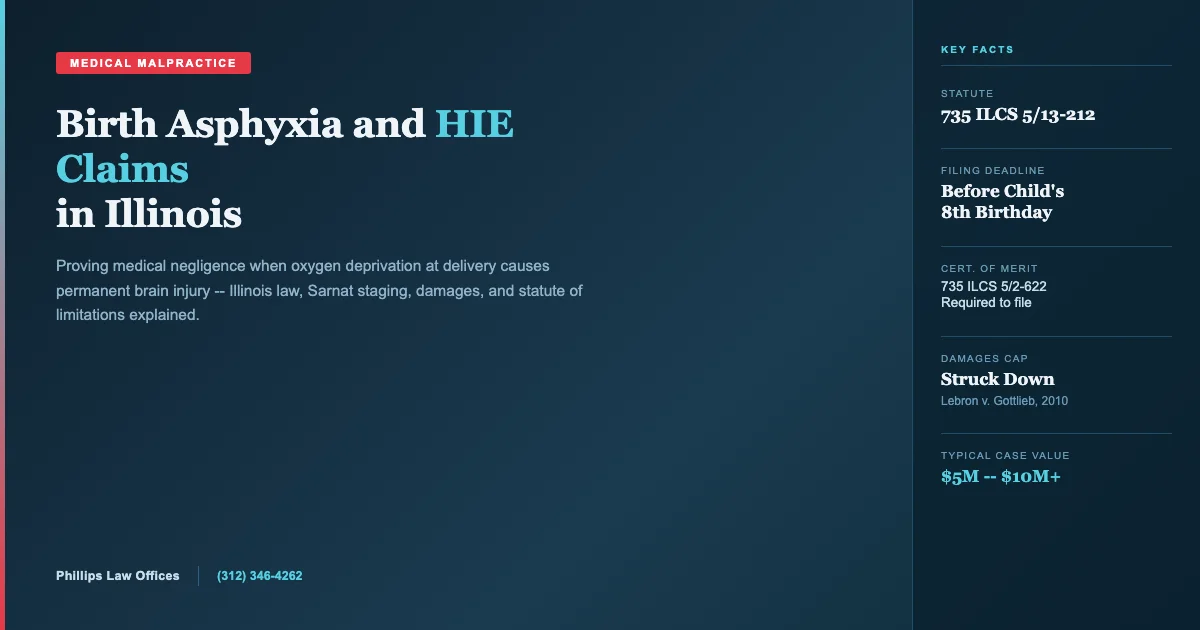
Birth Asphyxia and HIE Claims in Illinois — Proving Medical Negligence
Birth asphyxia means a newborn’s brain was deprived of oxygen before, during, or shortly after delivery. Free consultation with a Chicago injury lawyer.
-
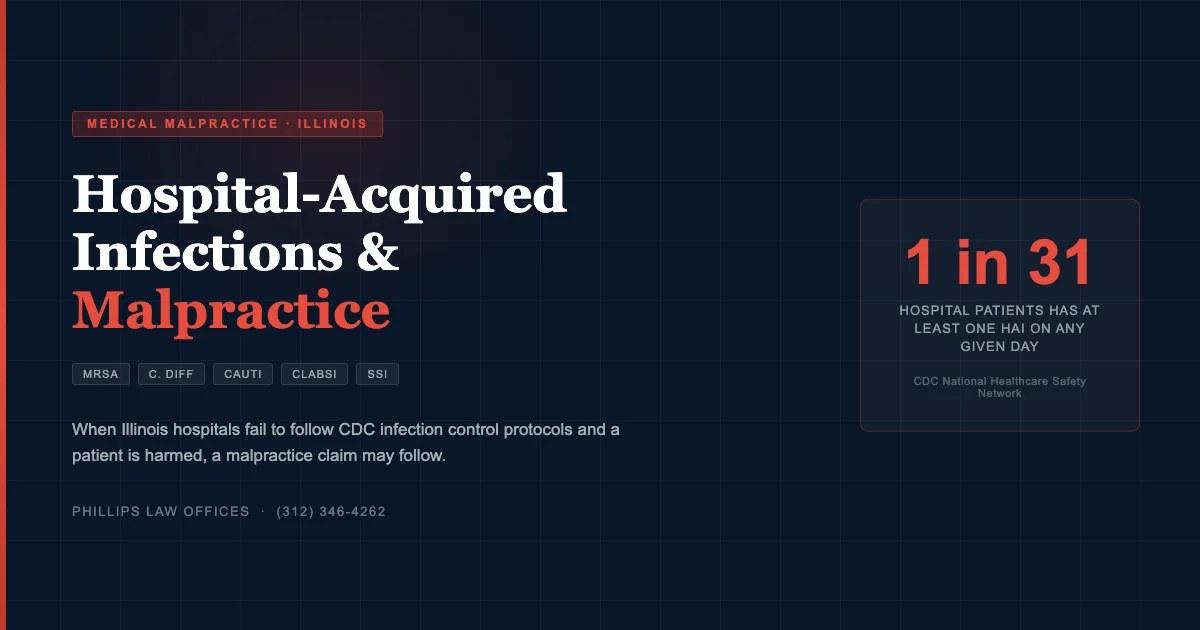
Hospital-Acquired Infections and Medical Malpractice in Illinois
Hospital-acquired infections (HAIs) — MRSA, C. difficile, CLABSI, CAUTI, and surgical site infections — are largely preventable under established infection control protocols. When an Illinois hospital…
-
Medication Errors and Drug Mix-Up Malpractice in Illinois
Medication errors — wrong drug, wrong dose, wrong patient, or dangerous drug interactions — are a leading cause of preventable hospital harm in Illinois. When a…
-
ER Errors and Emergency Room Malpractice in Illinois
Emergency room errors cause serious harm because patients are vulnerable and decisions are made fast. In Illinois, ER malpractice claims require proving the provider deviated from…
-
Birth Injury vs. Birth Defect: The Legal Distinction in Illinois
A birth injury results from medical negligence during labor and delivery. A birth defect is a congenital condition that developed before birth. The distinction determines whether…
-
Surgical Never Events in Illinois Hospitals
Surgical never events — wrong-site surgery, retained objects, wrong patient, wrong procedure — are so clearly preventable that Illinois courts treat them as near-automatic proof of…
-
Anesthesia Errors in Illinois Hospitals and Surgery Centers
Attorney guide to Illinois anesthesia malpractice: common errors, the anesthesia record as evidence, proving the breach, and the catastrophic injuries that follow.
-
Failure to Diagnose Cancer in Illinois Medical Malpractice
Attorney guide to Illinois failure-to-diagnose cancer claims: standard of care, recurring scenarios, the 4-year repose trap, causation proof, and how stage difference drives case value.