
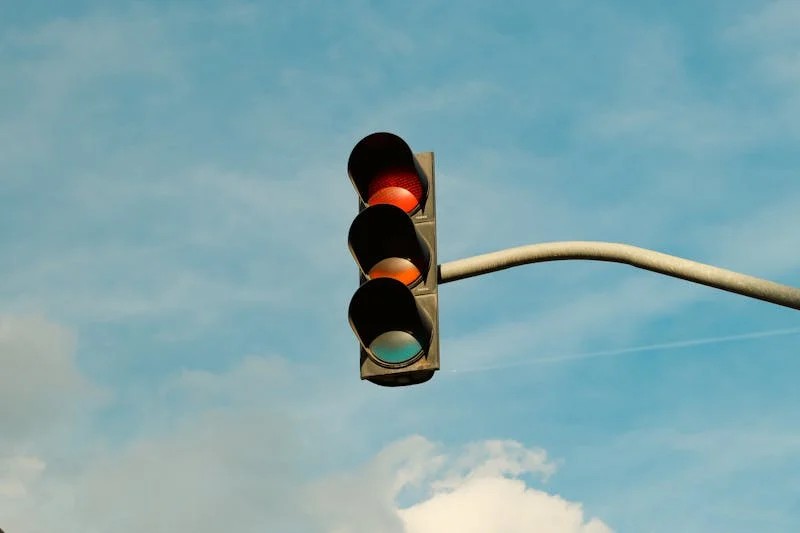
Intersections are some of the most dangerous places on Chicago’s roads. Traffic converges from multiple directions, drivers are often rushing to make a light, and a single misjudged second can turn a routine commute into a violent, high-speed collision. Red- and yellow-light crashes happen constantly across the city, from the North Side grid to the South Side corridors, and they tend to produce worse injuries than a typical fender-bender because the vehicles involved rarely have time to slow down first.
Most of these crashes trace back to a small set of driver decisions: accelerating instead of braking as a light turns yellow, misjudging how much time is left before a light changes, failing to yield while turning, or simply not paying attention until it’s too late. The result is usually a T-bone or left-turn collision, both of which put occupants directly in the path of the other vehicle with almost no crumple zone to absorb the impact.
If you were hurt in one of these crashes, the injuries can be similar to what shows up in rear-end collisions or left-turn crashes involving pedestrians and cyclists, but the fault questions are usually more contested. Whoever’s insurance company is on the hook will look for any excuse to argue the light “had just changed” or that you could have stopped sooner. That is exactly where an experienced Chicago car accident lawyer becomes useful, gathering the traffic-camera footage and signal-timing records before they disappear and building a claim around what actually happened. Our overview of Illinois car accident laws covers the broader legal framework these claims sit inside.
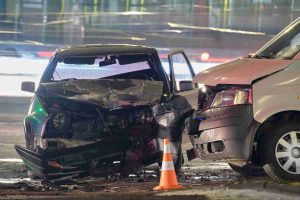
What Illinois Law Actually Says About Red and Yellow Lights
A surprising number of drivers never learn the actual legal definitions of a yellow or red signal. Under 625 ILCS 5/11-306, Illinois’ traffic-control signal statute, a steady yellow light is a warning that the red signal is about to be shown, and a driver facing it “shall stop” before entering the intersection unless already so close that stopping cannot be done safely. A steady red light requires a complete stop before the crosswalk or intersection line, full stop, not a rolling slowdown. Anyone who enters an intersection after the light has turned red is, on paper, already in violation of the statute, which becomes powerful evidence once a police report or camera footage confirms the timing.
Right-of-way at a controlled intersection is separately addressed under 625 ILCS 5/11-904, which governs vehicles that are already lawfully in an intersection when a signal changes and clarifies who has to yield during turning movements. Combine the two statutes and you get the legal backbone of almost every red- or yellow-light injury case: was the defendant’s light red at the moment of impact, and if the light had just changed, did the other driver have the right-of-way to be there.
Chicago’s Red-Light Camera Program Can Work in Your Favor
Chicago operates one of the largest automated red-light camera networks in the country under 625 ILCS 5/11-208.6, the state law that authorizes municipalities to enforce red-light violations electronically. If your crash happened at a camera-equipped intersection, that footage may exist independently of what either driver or witness remembers, and it is often the single most persuasive piece of evidence in a disputed liability claim. The catch is timing: camera footage retention windows vary, and requesting it early protects your claim before it is ever at risk of being overwritten or discarded.
How Comparative Negligence Plays Out at a Red-Light Crash
Illinois follows a modified comparative negligence rule under 735 ILCS 5/2-1116. You can still recover damages even if you were partly at fault for a crash, as long as your share of fault is 50% or less, but your total recovery is reduced by your own percentage of fault. Say a jury values a red-light crash claim at $180,000 but finds you 15% at fault, maybe for being a few miles over the limit as you entered the intersection. Your recovery would drop to $153,000. If your fault were found to be 51% or higher, Illinois law bars recovery entirely.
This is precisely why insurance adjusters push so hard on ambiguous light-timing details after these crashes. Shifting even 20 or 30 percentage points of fault onto you is worth tens of thousands of dollars to the company paying the claim. Signal-timing records, dashcam footage, and independent witness statements are what typically settle these disputes rather than each driver’s memory of the moment. The same fault-allocation fight shows up in claims where a passenger, rather than another driver, contributed to the crash, our page on passenger negligence claims covers that scenario in more depth.
A Hypothetical Illustration
Consider a hypothetical, not an actual case: a driver heading south on Western Avenue enters the intersection at Peterson Avenue just as the light turns yellow, intending to clear it before it changes to red. A driver waiting to turn left from the opposing direction, seeing the yellow, assumes the intersection is about to clear and begins the turn. The two vehicles collide in a T-bone pattern. Traffic-camera footage later shows the through driver entered on a yellow that had already been active for over three seconds, close to the edge of what a court might treat as an unsafe entry, while the turning driver moved before confirming the intersection was clear. A jury could reasonably split fault between both drivers rather than assign it entirely to one, which is exactly the kind of outcome that makes early evidence-gathering so important.
Injuries Commonly Seen in Red- and Yellow-Light Collisions
Because these crashes tend to happen at or near full speed rather than during a slow-and-stop maneuver, the injuries are often severe:
- Traumatic brain injuries from sudden impact or a head strike against the window or pillar
- Neck and back injuries, including whiplash, herniated discs, and spinal trauma
- Broken bones from seatbelt restraint forces or direct collision with the door or dashboard
- Internal injuries that may not produce symptoms for hours or days
- Shoulder and knee injuries, especially common in side-impact (T-bone) collisions
- Airbag and seatbelt-related injuries, which can still be significant even though they prevent worse harm
Side-impact crashes deserve particular attention because most vehicles have far less structural protection on the doors than on the front or rear bumpers. A T-bone collision at 30 miles per hour can produce forces similar to a much faster head-on impact for the occupant on the side that was struck. For more on the range of injuries that follow these crashes, see our guide on common car accident injuries in Chicago.
Why Chicago Intersections Are Especially Prone to These Crashes
The city maintains more than 3,000 signalized intersections, and a combination of dense traffic, aggressive driving habits, and winter weather turns a meaningful share of them into recurring crash sites. A few contributing factors show up again and again in crash reports.
Distracted driving is the most common, and it’s a recurring theme across most of the common types of car accidents in Chicago, not just intersection crashes. Texting, adjusting navigation, or even a few seconds of conversation with a passenger is enough to miss a light change entirely. Speeding to “beat the light” is a close second, particularly on wide, multi-lane arterials like Western, Ashland, and Cicero, where drivers have more room to accelerate and less incentive to slow down as a light turns yellow.
Rush-hour congestion adds its own risk. Stop-and-go traffic, drivers blocking the box, and last-second lane changes near a signal all increase the odds of a rear-end or T-bone crash. Visibility problems compound the issue: large CTA buses, delivery trucks, and parked vehicles near a corner can hide a car that is about to enter the intersection until it’s too late to react.
Winter weather is its own category of risk in Chicago. Black ice, slushy crosswalks, and snowbanks that block sightlines all extend stopping distances well beyond what a driver expects. A driver who genuinely intends to stop for a red light can still slide through the intersection on ice, which raises a different legal question: was the driver going too fast for conditions, a separate basis for negligence under Illinois’ general duty-of-care standard, regardless of what the signal showed.
Intersections With a History of Red- and Yellow-Light Crashes
Certain Chicago intersections show up disproportionately often in crash reports because of traffic volume, road design, or nearby commercial activity:
- Stony Island Avenue & 79th Street, a heavily traveled multi-lane corridor with frequent bus activity and complex turning patterns
- Western Avenue & Peterson Avenue, long signal cycles and heavy left-turn volume make this one of the North Side’s most contested intersections
- Ashland Avenue & 63rd Street, high pedestrian activity combined with commercial driveways and drivers pushing through yellow lights
- North Avenue & Cicero Avenue, a high-speed, high-volume retail corridor where red-light running is common
- Lake Shore Drive exits and merges, high-speed merging combined with sudden braking when a downstream signal changes
- Dan Ryan, Kennedy, and Eisenhower expressway ramps, last-second lane changes near a controlled intersection frequently produce side-impact and chain-reaction, multi-vehicle crashes
Left-turn crashes deserve a separate mention because pedestrians and cyclists are especially vulnerable at these locations, drivers turning left often misjudge oncoming speed or fail to check the crosswalk before completing the turn. These collisions frequently lead to catastrophic injuries precisely because a person on foot or on a bike has no structural protection at all. Learn more in our guide on the Chicago lane-change crash lawyer page, which covers the evidence issues that overlap with left-turn and lane-change disputes.
When a Malfunctioning Signal Is the Real Cause
Not every red- or yellow-light crash is caused by driver error. Occasionally a signal malfunctions, gets stuck on a stale timing cycle, or is knocked out of alignment after a utility outage, and both drivers enter the intersection believing they had the right-of-way. If the City of Chicago or the Illinois Department of Transportation maintained the signal in question, a claim against the government entity is possible, but it comes with a much shorter deadline than an ordinary car accident claim. Under 745 ILCS 10/8-101 of the Local Governmental and Governmental Employees Tort Immunity Act, the lawsuit generally has to be filed within one year, not the standard two years that applies to a typical injury suit. Missing that window can eliminate an otherwise valid claim entirely, so a malfunctioning-signal crash should be investigated quickly.
How Long You Have to File a Claim
Under 735 ILCS 5/13-202, Illinois gives injury victims two years from the date of the crash to file a personal injury lawsuit. That deadline sounds distant right after a crash, but evidence has its own, much shorter clock: traffic-camera footage, nearby business surveillance video, and even the physical damage to both vehicles can disappear or degrade in a matter of weeks. Waiting until close to the two-year mark to start building a claim usually means working with far less evidence than was available in the first month.
How an Attorney Investigates a Red- or Yellow-Light Crash
An attorney’s first move after one of these crashes is usually a records request: traffic-camera and red-light camera footage where it exists, the responding officer’s report, signal-timing logs from the city, and any nearby business or CTA bus camera that might have caught the intersection. Similar records requests come up in highway crash claims, where timing and camera coverage are just as central to proving fault. Witness statements matter too, particularly from drivers stopped at the same light who had a clear side view of the collision.
From there, the analysis usually turns to reconstructing exactly when the light changed relative to the moment of impact. Vehicle speed, stopping distance, and the physical positions of both cars after the crash all help pin down whether a driver ran the light, misjudged a yellow, or was denied the right-of-way despite having a green signal. Your attorney also takes over communication with the insurance adjuster, since recorded statements taken in the first days after a crash are a common source of accidental admissions that get used against an injured person later.
Once liability is established, the claim moves to valuing the damages: medical bills already incurred and reasonably expected in the future, lost income during recovery, pain and suffering, and vehicle repair or replacement costs. Our guide on compensation basics in Illinois car accident claims walks through how each of those categories gets valued. Because Illinois allows recovery of full damages even where you share some fault (subject to the 50% bar described above), documenting the extent of your injuries matters just as much as proving the other driver ran the light. If you had a prior injury that this crash aggravated, see our page on claims involving pre-existing conditions, since insurers often try to attribute new symptoms to old ones.
Frequently Asked Questions
Who is at fault if both drivers say the light was in their favor?
This is one of the most common disputes in intersection crashes. Traffic-camera footage, signal-timing logs, and independent witnesses are usually what resolve it, since both drivers’ memories are unreliable under stress. If no camera footage exists, an attorney may rely on vehicle damage patterns and accident-reconstruction analysis instead.
Does a red-light camera ticket automatically prove fault in a civil case?
Not automatically, but it is strong evidence. A red-light camera citation issued to the other driver under 625 ILCS 5/11-208.6 documents that their vehicle entered the intersection after the signal turned red, which supports (though doesn’t single-handedly guarantee) a finding of civil negligence.
What if the crash happened on a stale yellow that had been active for several seconds?
Illinois law doesn’t set a fixed number of seconds that makes entering on yellow automatically unsafe, it depends on whether the driver could have stopped safely given their speed and distance from the intersection at the moment the light changed. This is exactly the kind of fact-specific question that benefits from an early investigation.
Can I still recover damages if I was speeding when the crash happened?
Possibly, under Illinois’ modified comparative negligence rule you can recover reduced damages as long as your share of fault doesn’t exceed 50%. Speeding alone doesn’t automatically bar a claim, though it will factor into how fault is allocated.
How soon should I request traffic-camera footage after a crash?
As soon as possible. Retention periods for both red-light camera footage and general traffic-camera recordings vary, and some systems overwrite older footage on a rolling basis measured in weeks, not months.
What should I do at the scene if I believe the other driver ran the light?
Take photos of the intersection, the vehicle positions, and any visible signal heads if it’s safe to do so, get contact information from anyone who witnessed the collision, and ask the responding officer to note the intersection’s camera coverage in the police report if you’re aware of one.
Talk to a Chicago Car Accident Lawyer
If you were hurt in a red- or yellow-light crash anywhere in Chicago, you don’t have to sort out fault with the insurance companies on your own. Phillips Law Offices investigates intersection crashes, left-turn collisions, and T-bone accidents across the city, gathering camera footage and signal records before they disappear and handling every conversation with the adjuster on your behalf.
Phillips Law Offices offers free consultations and works on a contingency basis, meaning you pay no attorney fees unless the case results in a recovery. Call (312) 346-4262 or reach out through our contact page to talk through what happened and find out where your claim stands. You can also start with our main Chicago car accident lawyer overview if you’re still weighing whether to bring in an attorney at all.
More Illinois Injury Guides
- Chicago Road Defect Accident Lawyer | Injury Claim Guide
- Chicago Seatbelt Injury Lawyer
- Self Driving Car Accidents in Chicago: What Injured Victims Need to Know
- Chicago Car Accident Lawyer Resources and Guides
How shared blame changes the payout is explained in Illinois’ 51% bar rule.