

Self-driving and partially autonomous vehicles are now a regular presence on Chicago roads, from downtown intersections to the high-speed stretches of the Kennedy and Dan Ryan expressways. The technology is genuinely useful, but it isn’t accident-proof. Sensors misread objects, software misjudges a hazard, and drivers who trust the automation too much stop paying attention at exactly the wrong moment. When one of these systems fails, the resulting crash raises a question an ordinary two-car accident doesn’t: was it the driver, the manufacturer, a software vendor, another driver entirely, or some combination of all four?
That question matters because Illinois doesn’t have a comprehensive statute specifically written for autonomous-vehicle crashes the way a handful of other states do. These claims get analyzed through the same ordinary negligence and product liability principles that apply to any car accident, just applied to a much more complicated set of facts. Figuring out where the fault actually sits is the central challenge in almost every one of these cases.
If you were hurt in one of these crashes, the injuries themselves usually look like injuries from any serious collision, but the path to recovering compensation runs through a more layered investigation than an ordinary two-car accident, and it rewards moving quickly before evidence and data disappear.
“Self-Driving” Usually Doesn’t Mean What People Think It Means
Most vehicles marketed with autonomous features on the road today are not actually self-driving in the sense of requiring no human attention. The auto industry uses a six-level framework, Level 0 through Level 5, originally developed by SAE International and referenced by federal safety regulators, to describe how much of the driving task a system actually handles. The vast majority of consumer vehicles with adaptive cruise control, lane-centering, or “autopilot” branding sit at Level 2, meaning the driver is still legally and practically required to supervise the system and be ready to take over immediately. A crash that happens while a Level 2 system was engaged is still very much a driver-attention case in most respects, even though the marketing language makes it sound more automated than it is. Fully driverless Level 4 and Level 5 systems exist in limited pilot deployments elsewhere but are not in widespread ordinary use on Chicago streets.
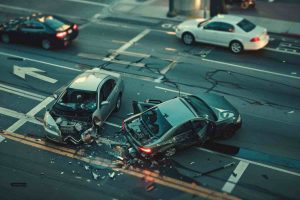
How These Crashes Typically Happen
A handful of failure patterns show up repeatedly in autonomous and partially autonomous vehicle crashes. Software can misinterpret a traffic pattern or miscalculate the speed and distance of another vehicle, causing the car to brake too late or accelerate into a hazard. Sensor failures, an obstructed camera, a malfunctioning lidar unit, radar that misreads an object, can cause the vehicle to miss a pedestrian, cyclist, or stopped car ahead entirely. Drivers who over-trust the system are a major contributing factor in their own right: distraction, drowsiness, or simply assuming the car will handle a situation it wasn’t designed for turns what should have been a near-miss into a real collision.
Chicago’s own road conditions add another layer of difficulty. Road salt residue, snow-covered lane markings, and potholes all interfere with the cameras and sensors these systems depend on, and a system that performs well in clear, dry conditions can behave unpredictably in a Chicago winter. Related road-condition issues are covered in our guide on road-defect accidents in Chicago. And, as with any crash, a nearby human driver who is speeding, weaving, or driving recklessly can cause a collision that no amount of automation could have avoided.
Who Can Be Held Liable
Liability in these cases can land on more than one party at once, which is part of why they take longer to investigate than an ordinary crash.
The vehicle’s operator remains responsible for staying attentive and ready to intervene, since virtually every consumer-available system still requires this by design. A driver who was scrolling their phone, asleep, or otherwise not supervising the system when it needed intervention can be held liable in largely the same way as any distracted driver. The vehicle manufacturer can be independently liable under Illinois’ strict product liability doctrine if a software defect, a sensor flaw, or a faulty automation response caused or contributed to the crash, separate from anything the driver did. Third-party technology vendors that supply navigation, braking, or object-detection software to a manufacturer can share responsibility if their specific component failed. And if a road defect, missing signage, or poor lighting played a role, a government entity may bear some responsibility as well, though claims against a public entity come with a much shorter notice deadline than an ordinary injury claim.
A Hypothetical Illustration
Consider a hypothetical, not an actual case: a vehicle with an active lane-keeping and adaptive cruise system fails to detect a stopped car ahead in heavy fog on the Kennedy Expressway and rear-ends it at full following speed. The driver had glanced at a phone notification a few seconds before impact. Later analysis shows the system’s camera-based detection likely struggled with the reduced visibility, while the driver’s own inattention meant they didn’t catch the failure in time to brake manually. A case like this could reasonably involve both a product-defect theory against the manufacturer and an ordinary negligence claim against the driver, since either failure alone might not have caused the crash, but together they did.
Why Multi-Party Cases Take More Work to Build
A crash with a single at-fault driver is relatively straightforward to investigate. A crash where an autonomous system, a distracted driver, and possibly a road defect all contributed is not. Each potential defendant’s insurer has an incentive to point at the others, and the manufacturer in particular will often argue the driver failed to intervene rather than acknowledge a system limitation. This dynamic is similar to what shows up in ordinary multi-vehicle crash claims, just with a software company added to the list of parties pointing fingers at each other. Building a case that holds up against that kind of pushback generally requires an attorney who can pursue formal discovery and bring in the right experts rather than relying on what any single party voluntarily admits. Illinois’ rules on comparative negligence and shared fault and on pre-existing conditions both come into play more often in these cases than in a typical two-driver crash, simply because there are more variables for an insurer to raise.
Why the Evidence Disappears Faster Than You’d Expect
Modern vehicles, autonomous or not, generate an enormous amount of telemetry: event data recorder logs, sensor recordings, software version histories, and system alerts in the seconds before a crash. This data is often the single most important evidence in an autonomous-vehicle case, and it doesn’t last indefinitely. Manufacturers and fleet operators have their own retention schedules, and a vehicle that gets repaired, resold, or returned to service can have that data overwritten within weeks. A formal preservation request, sometimes called a litigation hold, needs to go out to the manufacturer or vehicle owner quickly to stop this data from being lost before an expert ever gets to examine it.
Federal Crash-Reporting Requirements Can Help Your Case
Manufacturers of vehicles equipped with advanced driver-assistance or automated driving systems are required to report qualifying crashes to the National Highway Traffic Safety Administration under a federal standing general order covering these technologies. That reporting requirement exists separately from any lawsuit and doesn’t automatically hand you evidence, but it does mean the manufacturer already has an internal process for investigating incidents like yours, and that investigation, along with any records connected to it, can sometimes be obtained through formal discovery once a claim is filed. It’s also a useful reminder that regulators already treat these systems as being different enough from ordinary vehicles to require special oversight, which undercuts any argument that a crash involving the technology should be treated as routine.
How Comparative Negligence and Timing Deadlines Apply
Illinois follows a modified comparative negligence rule under 735 ILCS 5/2-1116. You can still recover damages even if you bear some responsibility for the crash, as long as your share of fault is 50% or less, though your recovery is reduced by your own percentage of fault. An ordinary negligence claim against a driver carries the standard two-year statute of limitations under 735 ILCS 5/13-202. A product liability claim against a manufacturer runs on that same two-year clock but is also subject to a separate statute of repose under 735 ILCS 5/13-213, which can cut off the claim after a set number of years from the vehicle’s original sale regardless of when the defect caused an injury. And if a government entity is implicated because of a road defect, a much shorter notice deadline applies under 745 ILCS 10/8-101, generally one year rather than two. Sorting out which of these deadlines applies, and to which defendant, is one of the first things that needs to happen in a case like this.
What Compensation Can Cover
A successful claim can cover current and future medical bills, lost income during recovery, reduced earning capacity if the injury has lasting effects, pain and suffering, vehicle repair or replacement, and, in more serious cases, long-term disability or rehabilitation costs. Our broader guide on Illinois car accident laws covers how these categories are generally calculated across any type of crash, autonomous-vehicle cases follow the same damages framework, just often with more than one defendant potentially contributing to the total recovery.
Injuries Commonly Seen in These Crashes
Because autonomous and partially autonomous systems can brake, accelerate, or fail to respond without warning, the resulting impacts are often full-speed rather than gradual, and injuries tend to reflect that:
- Whiplash and neck strain from a sudden, unanticipated stop or impact
- Herniated discs and other back injuries from the force transmitted through the seat and spine, covered in more detail in our guide on types of back injuries from car accidents
- Seatbelt-related bruising, rib fractures, or abdominal trauma, covered in more detail in our seatbelt injury guide
- Concussions and traumatic brain injuries, sometimes without any direct impact to the head
- Broken bones in the arms, wrists, ribs, or legs
- Internal injuries that may not be visible right away and require prompt imaging to catch
What to Do After the Crash
Get medical attention immediately, even if you feel fine, since injuries from a sudden automated stop or unexpected acceleration can take hours to fully present. Call the police and get an official report, and photograph the scene, both vehicles, and any visible damage before anything is moved or repaired. Avoid saying anything that sounds like an admission of fault, autonomous vehicle liability is genuinely complicated, and an offhand comment at the scene can be used against you later even if it wasn’t accurate. Most importantly, avoid giving a recorded statement to any insurance company, the driver’s, the manufacturer’s, or your own, before speaking with an attorney, since these claims frequently involve more than one insurer working to shift blame elsewhere. Our page on why hiring a Chicago car accident lawyer matters covers this in more depth, and it applies even more strongly here given how many parties can be involved. Our guide on compensation basics in Illinois car accident claims walks through what documentation you’ll want to start gathering right away.
Frequently Asked Questions
Is Illinois’ comparative negligence rule different for autonomous vehicle crashes?
No, the same 735 ILCS 5/2-1116 modified comparative negligence framework applies regardless of whether a vehicle was operating autonomously. What differs is how fault gets allocated among potentially several defendants rather than just two drivers.
Can I sue both the driver and the manufacturer at the same time?
Yes. These aren’t mutually exclusive theories, a driver’s inattention and a manufacturer’s software or sensor defect can both contribute to the same crash, and Illinois law allows pursuing multiple responsible parties in the same case.
How do I know if the autonomous system was even engaged at the time of the crash?
This is exactly the kind of question the vehicle’s own event data and system logs can answer, which is why preserving that data quickly matters so much. Without it, this becomes a much harder fact to establish.
What if the other driver’s car had the autonomous feature but I don’t know if it was on?
An attorney can request the vehicle’s data through discovery or a preservation letter even without knowing in advance whether the system was active, since that determination often comes from the data itself rather than from what either driver remembers.
Do rideshare vehicles with driver-assist features raise different issues?
Potentially. A rideshare driver’s own insurance tier and the platform’s commercial policy sit alongside the ordinary driver and manufacturer liability questions, adding another layer of coverage that needs to be identified and pursued.
Will the manufacturer just blame the driver to avoid responsibility?
This is a common pattern in these cases. Manufacturers frequently argue that a driver failed to intervene in time, shifting attention away from a possible sensor or software limitation. This is exactly why an independent investigation, rather than relying on the manufacturer’s own account, matters so much.
What if I can’t tell whether my own vehicle’s system malfunctioned or I simply reacted too slowly?
That distinction is often impossible to make from memory alone in the middle of a fast-moving crash. It’s a question for the vehicle’s own data and, where needed, an engineer who can reconstruct the timeline, not something you need to resolve yourself before talking to an attorney.
How Multiple Insurance Policies Interact
When more than one party bears some responsibility, more than one insurance policy is usually in play as well. A driver’s personal auto policy, a manufacturer’s product liability coverage, and potentially a rideshare or commercial policy can all be implicated in the same crash, and they don’t always cooperate with each other. Each insurer typically wants to minimize its own exposure, which sometimes means one insurer arguing that a different insurer’s policyholder was primarily at fault. Untangling that, and making sure a settlement with one party doesn’t inadvertently release a claim against another, is exactly the kind of coordination problem that benefits from experienced legal representation rather than negotiating with each insurer separately and hoping the pieces add up to full compensation.
Talk to a Chicago Self-Driving Car Accident Lawyer
If you were injured in a crash involving a self-driving or partially autonomous vehicle in Chicago, you shouldn’t have to sort out fault among a driver, a manufacturer, and a technology vendor on your own. Phillips Law Offices investigates the full picture, preserves vehicle data before it disappears, and pursues every responsible party. Consultations are free, and there’s no attorney fee unless the case results in a recovery.
Call (312) 346-4262 or visit our contact page to schedule your free consultation. We’ll walk you through the evidence that needs to be preserved right away and explain which parties are likely to be involved in your specific claim.