

Single-vehicle accidents get treated as open-and-shut more often than they should. The assumption is straightforward: if only one car was involved, the driver must have caused it. Under Illinois law, that assumption is frequently wrong. A crash into a guardrail, a tree, or a highway median can trace back to a pothole the city knew about and never fixed, a tire that failed because of a manufacturing defect, or another driver who cut you off and disappeared before anyone got a plate number. Chicago’s mix of expressway curves, aging neighborhood streets, and severe winter weather makes these scenarios common rather than rare, and insurers know that the “obvious” explanation is often the one that costs them the least to accept.
If you were hurt in a single-vehicle crash, don’t assume you’re stuck absorbing the loss yourself. A knowledgeable Chicago car accident lawyer can help sort out whether a driver, a government agency, a manufacturer, or an unidentified second driver actually caused what happened. This guide covers what actually counts as a single-vehicle accident, who besides the driver can end up liable, how Illinois’ reporting rules work, and what evidence typically makes the difference in these claims.
What Counts as a Single-Vehicle Accident
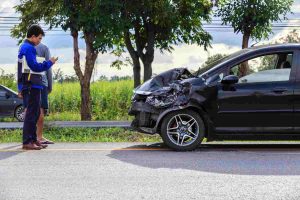
A single-vehicle accident is any crash involving only one vehicle, regardless of what or who ultimately caused it. Common examples include striking a fixed object like a tree, pole, or guardrail, running off the roadway, a rollover, hitting debris left in the road, or swerving hard enough to lose control. The key point worth remembering: a single-vehicle accident does not mean the driver is automatically at fault. It means only one vehicle sustained contact, which is a very different thing.
What Actually Causes These Crashes
Driver-related factors, speeding, distraction, fatigue, impairment, do contribute to a meaningful share of single-vehicle crashes, and an honest evaluation of any case has to consider them. But external factors show up constantly once you look closely. Road-related causes include potholes, missing or faded signs, poor lighting, malfunctioning traffic signals, unplowed snow, and unmarked construction zones, and Chicago’s freeze-thaw cycles make these especially common in winter and early spring. Vehicle-related causes include tire blowouts, brake failure, steering malfunctions, airbag defects, suspension failures, and electrical faults, any of which can point toward a manufacturer or a repair shop rather than the driver.
One category deserves particular attention: another driver can cause a single-vehicle crash without ever making contact. Cutting you off, drifting into your lane, or forcing a sudden swerve to avoid a collision can all lead directly to a single-vehicle crash where the only vehicle that touched anything was yours. Environmental factors, animals, fog, ice, high winds, or cargo that fell from another vehicle, round out the list of causes that have nothing to do with driver error.
Winter Weather Deserves Its Own Category
Chicago winters produce a disproportionate share of single-vehicle crashes, and the legal analysis for a weather-related crash isn’t as simple as “the road was icy, nobody’s at fault.” A driver who was going too fast for the actual conditions can still be negligent even while under the posted speed limit, since Illinois’ basic speed statute measures reasonableness against real conditions, not just a number on a sign. At the same time, a government entity that failed to plow, salt, or otherwise address a known icy stretch, especially one with a documented history of complaints, can share responsibility alongside the driver. These cases often turn on whether the specific patch of ice was an isolated, unforeseeable event or a recurring hazard the city already knew about, which brings the analysis back to the same notice requirement that applies to potholes and other road defects.
Rideshare and Commercial Vehicle Single-Vehicle Crashes
A single-vehicle crash involving an Uber, Lyft, or delivery driver raises the same underlying questions, road condition, vehicle defect, phantom second driver, layered on top of the rideshare or commercial insurance structure. If you were a passenger when your rideshare driver lost control avoiding a pothole or another vehicle, the driver’s own negligence, the platform’s commercial insurance, and a possible government or product liability claim can all be in play simultaneously, and sorting out which policy actually pays requires identifying every contributing cause rather than assuming the driver alone is responsible.
Who Can Be Held Liable
The driver is the default assumption in any single-vehicle crash, but that presumption can be overcome with the right evidence. A government entity, the City of Chicago, Cook County, or the Illinois Department of Transportation, can be liable if an unsafe road condition it knew about, or should have known about, caused the crash. Under 745 ILCS 10/3-102 of the Tort Immunity Act, a local government’s duty to maintain safe roads only applies once it had actual or constructive notice of the hazard, which is why documentation like 311 complaint history matters so much in these cases. A vehicle or parts manufacturer can be liable under Illinois’ strict product liability doctrine if a defective component caused the crash, subject to both the standard injury deadline and a separate statute of repose under 735 ILCS 5/13-213. And another driver can be liable even without physical contact, provided there’s evidence, dashcam footage, traffic camera video, or credible witness testimony, connecting their conduct to your loss of control.
When the Other Driver Vanishes: Phantom Vehicle Claims
A single-vehicle crash caused by a driver who cut you off and kept going presents a specific evidentiary challenge, since there’s no other vehicle to inspect and often no way to identify who caused it. Illinois’ uninsured motorist coverage requirements under 215 ILCS 5/143a generally extend to these “phantom vehicle” situations, but insurers typically require independent corroborating evidence, a witness, dashcam footage, or physical evidence consistent with an evasive maneuver, before honoring a UM claim based on a vehicle that was never identified. A police report filed immediately, even without an identified second vehicle, helps establish that something specific happened rather than an ordinary loss of control.
A Hypothetical Illustration
Consider a hypothetical, not an actual case: a driver on Lake Shore Drive swerves hard to avoid a vehicle that abruptly cuts into their lane without signaling, loses control, and strikes the median barrier. The other vehicle doesn’t stop. A passenger’s dashcam captured the merge and the swerve, giving the driver’s own insurer enough independent evidence to process a phantom-vehicle UM claim rather than treating the crash as ordinary loss of control with no other party involved.
Illinois’ Comparative Negligence Rule Still Applies
Insurers sometimes treat a single-vehicle crash as automatically 100% the driver’s fault, since there’s no obvious second party to point to. That’s not how Illinois law actually works. Under 735 ILCS 5/2-1116, fault gets allocated based on the actual facts, a defective road, a failed part, or another driver’s conduct can bear some or all of the responsibility even in a crash that only involved one vehicle making contact. You can still recover damages as long as your own share of fault doesn’t exceed 50%, though your recovery is reduced by your own percentage.
Illinois’ Crash Reporting Requirements
Under 625 ILCS 5/11-406, a crash involving injury, death, or property damage exceeding $1,500 has to be reported to police. If officers don’t respond to the scene, the driver is still required to file a report independently, and some crashes on interstates and state routes can be reported online through IDOT. Filing this report matters beyond the legal requirement itself, it creates an official, timestamped record of what happened before memories fade or physical evidence changes.
How Long You Have to File a Claim
An ordinary negligence or product liability claim carries Illinois’ standard two-year statute of limitations under 735 ILCS 5/13-202. If a government entity is implicated because of a road defect, that window shrinks dramatically: under 745 ILCS 10/8-101, suit against the public entity generally has to be filed within one year, not two. Identifying whether a government agency might bear responsibility should happen early, specifically because that deadline is so much shorter than people expect.
How Insurers Approach Single-Vehicle Claims Differently
Without a second driver’s insurer to negotiate against, your own insurance company often ends up handling both the property damage and, where applicable, any first-party medical or UM claim, which creates a built-in incentive to treat the crash as ordinary driver error rather than dig into external causes. A quick settlement offer in a single-vehicle case is sometimes less about resolving a disputed claim and more about closing the file before anyone investigates whether a road defect, a defective part, or a phantom vehicle actually caused the loss of control. Our guide on compensation basics in Illinois car accident claims covers how to evaluate whether an early offer reflects the real value of what happened. These crashes are also covered more broadly in our overview of common types of car accidents in Chicago.
Common Injuries in Single-Vehicle Crashes
Because single-vehicle crashes frequently involve striking a fixed object or rolling over, the forces involved can be severe:
- Traumatic brain injuries
- Whiplash and spinal injuries
- Broken bones
- Internal injuries
- Burn injuries
- Facial injuries and lacerations
- Soft tissue injuries
- Scarring and permanent disfigurement
Why Timing Matters More Than It Seems
Single-vehicle crashes lose their strongest evidence faster than people expect precisely because there’s no obvious second party pushing to preserve anything. A damaged guardrail or a pothole gets repaired by the city within days or weeks once reported, which is good for public safety but can erase the physical evidence of what caused your crash if it isn’t documented first. A vehicle that gets repaired or sold for salvage can take a suspected defective part with it. And a witness who saw a phantom vehicle cut you off is far easier to locate the week of the crash than six months later. None of this evidence disappears because anyone is acting in bad faith, it disappears through the ordinary course of repairs, resale, and time passing, which is exactly why documenting everything early matters even when liability isn’t obvious yet.
What Evidence Tends to Matter Most
Because there’s no second driver to point to, proving liability in a single-vehicle crash often depends on a wider range of evidence than a typical two-car accident: the police report, witness statements, dashcam and nearby traffic camera footage, black box event data recorder downloads, formal accident reconstruction, an engineering inspection of the vehicle if a defect is suspected, an analysis of the roadway condition itself, and complete medical documentation connecting the injury to the crash. Gathering several of these together, rather than relying on the police report alone, is usually what separates a claim that gets dismissed as “just an accident” from one that identifies a real, responsible party.
Compensation Available
Economic damages typically include medical bills already incurred and reasonably projected into the future, lost wages, diminished earning capacity if the injury has lasting effects, and property damage. Non-economic damages cover pain and suffering, emotional distress, loss of enjoyment of life, and scarring or permanent disfigurement, categories that don’t carry a fixed dollar value under Illinois law but scale with the severity and permanence of the injury and how much it changes daily life going forward.
Frequently Asked Questions
If I was the only car involved, doesn’t that mean it was my fault?
Not necessarily. A road defect, a defective vehicle part, or another driver who forced you off the road without making contact can all shift liability away from you, even though your vehicle was the only one that touched anything.
Can I file a claim if the other driver who caused my crash was never identified?
Potentially, through your own uninsured motorist coverage under a phantom-vehicle claim, though insurers generally require independent corroborating evidence beyond your own account of what happened.
What if I hit a pothole that I didn’t see until it was too late?
The government entity responsible for that road may be liable if it had notice of the defect and failed to repair it, but this requires filing a much shorter notice deadline than an ordinary claim, generally within one year.
How do I prove a tire blowout or brake failure was a defect and not normal wear?
This typically requires an engineering inspection of the failed component, ideally before the vehicle is repaired or scrapped, along with maintenance records showing the part wasn’t simply overdue for replacement.
Will my own insurance company fight a single-vehicle claim harder than a two-car claim?
Sometimes, since there’s often no other insurer to share the cost or corroborate the story. This is exactly why building a complete evidence file matters more in these cases, not less.
What if my crash happened during a snowstorm and the road hadn’t been plowed yet?
Whether the government is liable depends on how much time had passed since the storm started and what the entity’s own plowing schedule and response records show. A brief, ongoing storm generally provides less basis for a claim than a hazard that persisted for days without being addressed.
Can a passenger in my vehicle also bring a claim in a single-vehicle crash?
Yes. A passenger’s claim isn’t automatically barred just because the driver is a family member or friend, and the same analysis of road conditions, vehicle defects, or a phantom second driver applies to a passenger’s claim as it does to the driver’s own.
What if the police report just says “driver lost control” with no further explanation?
A brief police report is common and doesn’t end the inquiry. Independent evidence, 311 complaint history, an engineering inspection, or witness accounts, can establish a cause the responding officer never investigated or noted.
Does it matter whether my crash happened on a city street versus an IDOT-maintained highway?
Yes. Claims against the City of Chicago or Cook County follow the Tort Immunity Act’s one-year notice rule, while claims against the state, including IDOT, generally have to go through the Illinois Court of Claims rather than the regular circuit court system, a separate process with its own procedures.
Talk to a Chicago Car Accident Lawyer
If you were injured in a single-vehicle accident in Chicago, don’t assume you have no case simply because no other vehicle made contact. Phillips Law Offices investigates whether a road defect, a defective part, or another driver contributed to your crash, identifies every potentially liable party, and pursues full compensation on your behalf. Consultations are free, and there’s no attorney fee unless the case results in a recovery.
Call (312) 346-4262 or visit our contact page to schedule your free consultation. Our guide on why hiring a Chicago car accident lawyer matters and our overview of common car accident injuries in Chicago cover related ground. We’ll walk through what evidence still needs to be gathered and which parties, beyond the obvious one, might actually be responsible for what happened.