
A U-turn looks like a simple, low-risk maneuver right up until you’re the driver approaching one at 35 miles per hour with almost no warning. Chicago’s mix of narrow one-way streets, dense downtown blocks, and multi-lane arterials wasn’t built with wide turning movements in mind, and a driver who reverses direction in the wrong spot often exposes the full broadside of their vehicle to oncoming traffic that has no time to react. These crashes tend to be T-bone or head-on collisions, among the more dangerous impact patterns in any crash, for the same reason a red-light collision or a lane-change crash tends to be serious: the struck vehicle rarely gets a chance to brace for the impact.
What Illinois Law Actually Requires for a U-Turn
Illinois’ U-turn statute, 625 ILCS 5/11-1402, doesn’t ban U-turns outright, but it restricts them to situations where the driver has a clear, unobstructed view of approaching traffic for at least 500 feet in both directions, a distance most drivers underestimate when they glance over their shoulder before turning. That requirement rules out U-turns near hill crests, on curves, and at locations where parked cars, buildings, or other obstructions block the sight line, exactly the conditions common on Chicago’s dense downtown blocks and narrow neighborhood streets. Beyond the state statute, right-of-way rules under 625 ILCS 5/11-904 require a driver completing any turning movement to yield to traffic and pedestrians already in or approaching the intersection, which applies with particular force to a U-turn given how much longer the maneuver takes to complete than an ordinary turn.
Chicago’s own traffic patterns add a practical layer on top of the state law. Certain downtown corridors and specific intersections carry posted no-U-turn signage because of documented congestion or visibility problems, and ignoring a posted sign is straightforward evidence of negligence if a crash follows. A U-turn also has to be completed as one continuous movement rather than a multi-point turn that leaves a vehicle stopped or partially blocking a lane, since a stalled U-turn in the middle of traffic creates its own separate hazard. Poor roadway conditions can compound the problem further: a pothole or crumbling shoulder that forces a driver to adjust mid-turn is the kind of factor covered in our guide on road-defect accidents in Chicago, and it can shift some responsibility toward whichever government entity maintains that stretch of road.
Vehicles with driver-assist or partially automated features generally hand control back to the driver for a maneuver as deliberate as a U-turn, since most current systems aren’t designed to judge sight-distance requirements the way a human driver has to. A driver who assumes a lane-keeping or collision-avoidance system will catch a bad U-turn decision is making the same mistake covered in our guide on self-driving car accidents in Chicago, over-trusting automation for a task it was never built to handle.
Why U-Turn Accidents Happen
Several patterns recur in Chicago U-turn crashes. Illegal U-turns, made where sightlines are inadequate or a sign explicitly prohibits the maneuver, are the most direct cause, often because a driver misjudges the risk or simply doesn’t see the posted restriction. Limited visibility compounds the problem: tall buildings, delivery trucks, and tightly parked cars along Chicago streets can hide an approaching vehicle until it’s too close to avoid. Failure to yield is its own distinct failure mode, since a driver executing a U-turn is legally required to wait for a genuine gap in traffic, not just a gap that looks adequate at a glance. And distracted driving, a phone glance, a missed turn corrected with a sudden reversal, GPS confusion, shows up constantly in U-turn crash reports, since the maneuver already demands more attention and more time than drivers tend to budget for it.
Who Is Usually Liable
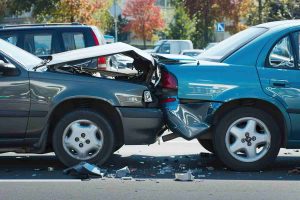
The driver executing the U-turn is presumed responsible in most cases, since Illinois law places the burden of ensuring the maneuver can be completed safely squarely on the driver making it, not on oncoming traffic to anticipate an unexpected reversal. Liability becomes especially clear where the turn was made in a no-U-turn zone, where the driver failed to yield to a vehicle with the right-of-way, or where inadequate sightlines existed and the driver went ahead anyway. That said, other parties can share responsibility: a following vehicle that was speeding or tailgating, a construction crew that removed or obscured a no-U-turn sign, or a second driver who was also violating a traffic law at the same moment can all shift some percentage of fault under Illinois’ comparative negligence framework.
A Hypothetical Illustration
Consider a hypothetical, not an actual case: a driver on a narrow two-way street near the Loop realizes they’ve missed a turn and executes a U-turn between two delivery trucks parked on either side of the street, unable to see more than a car length in either direction. An oncoming cyclist, riding at a normal speed with no way to anticipate the maneuver, has no room to avoid the turning vehicle and is struck broadside. The parked trucks reduced visibility below what 625 ILCS 5/11-1402 requires, and the driver’s decision to turn anyway despite the obstructed view would be central to establishing negligence.
Illinois’ Modified Comparative Negligence Rule
Illinois follows a modified comparative negligence system under 735 ILCS 5/2-1116. An injured driver, cyclist, or pedestrian can still recover damages even if they bear some responsibility, as long as their share of fault is 50% or less, though their recovery is reduced by their own percentage. This matters in U-turn cases specifically because insurers for the turning driver frequently argue the other vehicle was speeding or should have reacted faster, an argument aimed at shifting enough fault to reduce the payout even where the U-turn itself was clearly the primary cause. Our guide on getting money from a car accident without a lawyer in Chicago covers how fault percentages affect a claim’s value in more detail.
Evidence That Tends to Decide These Cases
Because U-turn liability often comes down to what each driver could actually see and when, evidence quality matters more here than in a straightforward rear-end crash. Police reports, nearby business or traffic camera footage, dashcam recordings, photographs of vehicle final positions and skid marks, and the presence or absence of posted signage all help establish whether the sight-distance requirement was met and who had the right-of-way. Witness statements are particularly valuable in U-turn cases since bystanders often have a clearer view of the full maneuver than either driver involved. This kind of evidence-driven analysis is similar to what’s needed in hit-and-run cases, where the facts have to be reconstructed rather than taken from either party’s own account.
Rideshare U-Turns and Curbside Pickups
Uber and Lyft drivers make U-turns far more often than the average commuter, typically to reach a pickup or drop-off point on the correct side of the street, and the pressure to arrive quickly can push a driver into a turn they’d otherwise skip. A rideshare driver’s commercial insurance policy generally applies to a crash caused during an active or accepted ride, adding a layer of coverage beyond the driver’s personal auto policy, but it also means identifying the correct policy tier is an early, necessary step rather than something to sort out later.
When a U-Turn Forces Another Driver Off the Road
Not every U-turn crash involves direct contact. A driver who swerves hard to avoid a car making an unsafe U-turn can end up in a single-vehicle crash of their own, striking a curb, a parked car, or a fixed object while trying to avoid the turning vehicle entirely. These cases follow much of the same analysis covered in our guide on single-vehicle accidents in Chicago, since liability can rest with the U-turning driver even though their vehicle never made contact with yours.
Common Injuries in U-Turn Crashes
Because U-turn collisions frequently involve a broadside or head-on impact rather than a glancing rear-end tap, the injuries tend to be more severe than the speed of the crash alone might suggest:
- Whiplash and neck injuries
- Back and spinal injuries, including herniated discs
- Traumatic brain injuries
- Fractures, particularly to the ribs, arms, and legs
- Chest injuries from seatbelt or steering wheel impact
Motorcyclists, cyclists, and pedestrians face the highest risk in these crashes, since they have essentially no structural protection during a broadside impact. Related injury patterns show up across many high-speed collision types, covered in our guide on highway crashes in Chicago, and seatbelt-pattern bruising is common enough in these impacts that it’s worth reviewing our separate guide on seatbelt injuries if that applies to what you experienced. Passengers in either vehicle can also be hurt, and where a passenger’s own conduct, distracting the driver or grabbing the wheel, contributed to the crash, the analysis covered in our passenger negligence guide becomes relevant as well.
Overlap With Other Crash Types
U-turn crashes share evidence and liability questions with several related crash types on this site. The split-second decision-making that causes many U-turn crashes overlaps with what shows up in speeding accident claims, since a driver who misjudges a gap in traffic is often also misjudging how fast the oncoming vehicle is actually traveling. Visibility problems caused by parked delivery vehicles or obstructed sightlines are a recurring theme in parking lot accident claims as well. And where more than one vehicle becomes involved in the aftermath of a botched U-turn, the fault-allocation analysis resembles what applies in multi-vehicle crash claims.
How Insurers Handle U-Turn Disputes
U-turn crashes are more contested than they might seem, precisely because fault turns on facts, sight distance, signage, timing, that neither driver can fully verify from inside their own vehicle. An insurer representing the turning driver has an obvious incentive to argue the oncoming vehicle was speeding, since Illinois’ comparative negligence rule means even a modest shift in fault percentage reduces what the insurer has to pay. The turning driver’s own recollection of “there was plenty of room” is rarely reliable once actual speed and distance get reconstructed, which is exactly why physical evidence, not either driver’s account, tends to decide these cases.
How Long You Have to File a Claim
Illinois gives injury victims two years from the date of the crash to file a personal injury lawsuit under 735 ILCS 5/13-202. If a government vehicle or a road-design defect (a missing or obscured no-U-turn sign, for example) contributed to the crash, a much shorter one-year notice deadline can apply to any claim against the responsible public entity, which is one more reason to have a crash evaluated early rather than waiting.
What to Do After a U-Turn Accident
Call the police so an official report exists, and photograph the scene, including vehicle final positions, any skid marks, and the relevant traffic signage, before anything is moved or cleared. Get contact information from any witnesses, since their account of the full maneuver can be more useful than either driver’s own recollection. Seek medical attention promptly even if you feel fine, and avoid discussing fault at the scene or in a recorded statement to any insurance company before speaking with an attorney. Insurers in U-turn cases frequently argue the other driver was speeding or distracted specifically to shift blame away from the turning vehicle, so how you describe the crash in the first conversation matters.
If any nearby business, gas station, or residential building has exterior cameras facing the intersection, ask about footage retention before it gets overwritten, since most commercial systems cycle through storage on a rolling basis measured in days or weeks rather than months. This kind of footage often ends up being the deciding piece of evidence in a disputed U-turn claim, since it captures the full maneuver from a vantage point neither driver had.
Frequently Asked Questions
Are U-turns illegal everywhere in Chicago?
No, but they’re restricted to locations with clear sightlines of at least 500 feet in both directions under state law, and specific Chicago intersections carry additional posted restrictions where U-turns are banned entirely regardless of visibility.
Is the driver making the U-turn always at fault?
Usually, since Illinois law places the burden of a safe U-turn on the driver making it, but a following driver who was speeding, tailgating, or otherwise violating the law can share some percentage of fault under Illinois’ comparative negligence rule.
What if the no-U-turn sign was missing or obscured by construction?
This can shift responsibility toward whoever removed or blocked the sign, potentially a construction contractor or, in some cases, a government entity, though it doesn’t automatically excuse a driver who ignored the general sight-distance requirement under state law.
I was a cyclist hit by a car making a U-turn. Do I have a claim?
Yes. Cyclists and pedestrians struck during a U-turn generally have strong claims, since the turning driver bears the legal responsibility to ensure the maneuver can be completed safely around all traffic, not just other cars.
Can dashcam footage from a third vehicle help my case?
Yes, and it’s often some of the most persuasive evidence available in a U-turn case, since it can show the full maneuver and sightline conditions from an angle neither driver directly involved could capture.
What if the U-turn happened in a rideshare vehicle I was riding in?
As a passenger, you generally have a claim regardless of which driver caused the crash, and the rideshare company’s commercial insurance policy may apply in addition to the driver’s personal coverage.
What if I swerved to avoid a U-turning car and hit something else instead?
You may still have a claim against the U-turning driver even though your vehicle didn’t make contact with theirs, provided there’s evidence connecting their maneuver to your loss of control.
How is fault determined when both drivers say the other one was too far away to matter?
This is typically resolved through physical evidence rather than either driver’s account: skid marks, vehicle damage patterns, camera footage, and sometimes formal accident reconstruction that calculates actual speeds and distances involved.
Talk to a Chicago Car Accident Lawyer
If you were hurt in a U-turn accident anywhere in Chicago, whether you were driving, riding as a passenger, or on a bike or on foot, Phillips Law Offices can evaluate the sightline and right-of-way questions that decide these cases, gather the evidence before it disappears, and pursue full compensation for your medical bills, lost income, and pain and suffering. Consultations are free, and there’s no attorney fee unless the case results in a recovery.
Call (312) 346-4262 or visit our contact page to schedule your free consultation.