
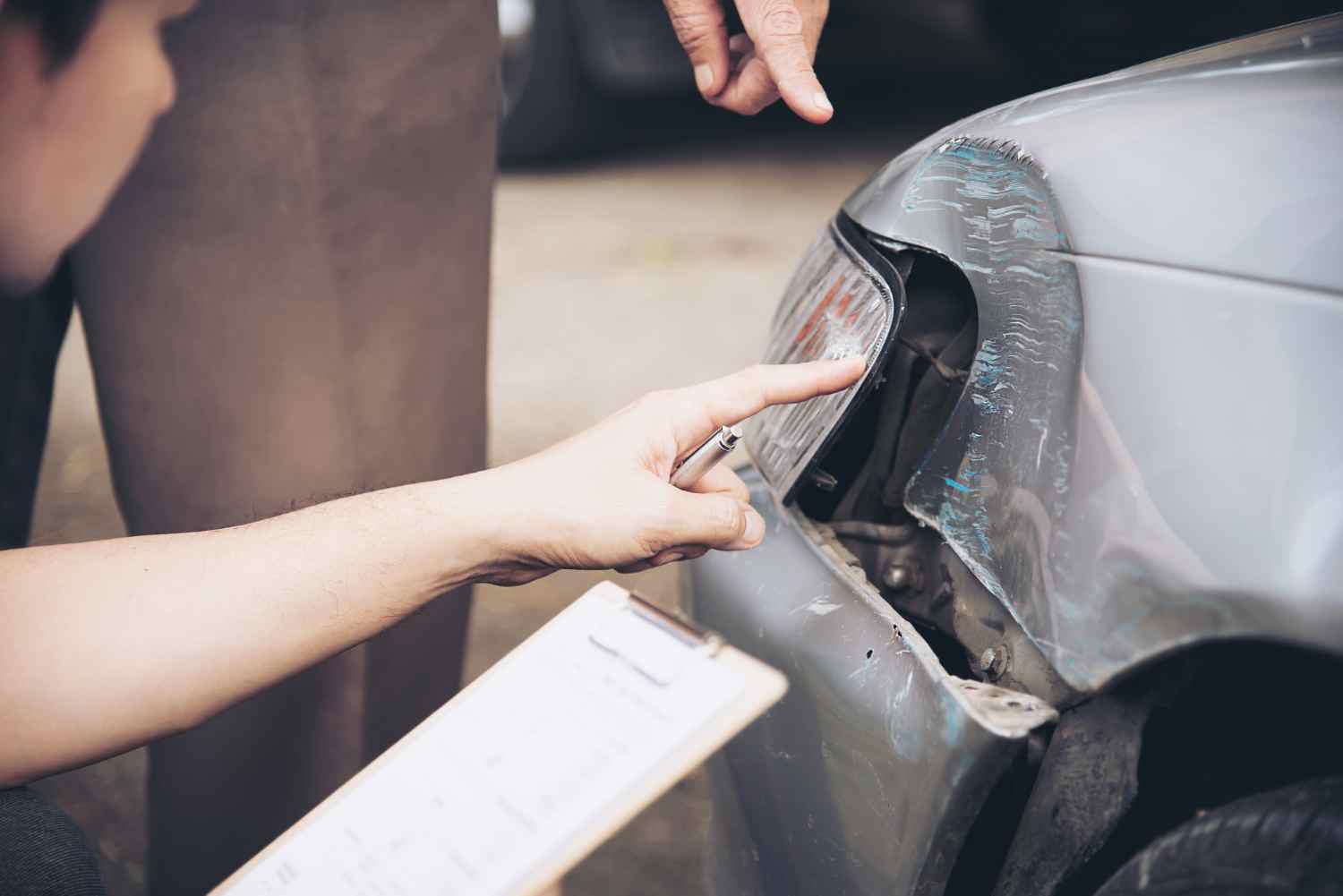
A car accident on the Kennedy, on Lake Shore Drive, or on a quiet side street in Bridgeport does the same thing to your week: it stops it cold. Medical appointments stack up. The body shop wants an answer by Friday. And somewhere in your inbox is an adjuster who sounds friendly on the phone and is paid to keep your payout small.
None of that is accidental. Insurance companies open a file within hours of a crash, sometimes before you’ve left the ER. Illinois law gives you real protections here, but only if you understand how fault, deadlines, and coverage actually work, and only if you avoid the handful of mistakes that quietly shrink a claim before a lawyer ever sees it.
This guide walks through what actually happens after a Chicago crash, what Illinois law says about who pays, and where people lose value in a claim without realizing it.
What a Crash Actually Costs You
The physical damage is the visible part. Underneath it sits everything else: missed shifts, a car payment on a car you can’t drive, physical therapy copays, and the low-grade anxiety that shows up every time you merge onto an expressway afterward. Insurance adjusters are trained to price the visible damage and downplay the rest.
That’s a mistake worth correcting early, not after a lowball offer arrives.
The First 48 Hours Decide More Than People Expect
At the scene: call 911, get the crash report number, and photograph everything, vehicles, skid marks, road conditions, visible injuries, before anything gets moved or repaired. Exchange information with every driver involved, not just the one you think caused it. Collect witness names and numbers while people are still standing there; most won’t answer a call from a stranger a week later.
Do not discuss fault at the scene. Not with the other driver, not with police beyond the facts, not with your own insurer’s recorded-line rep who calls the next morning sounding helpful. “I think I might have been going a little fast” is the kind of sentence that ends up quoted back to you in a settlement denial.
Within the next day or two: get a full medical evaluation even if you feel mostly fine. Adrenaline masks injury for hours, sometimes days, and insurers routinely argue that a gap between the crash and your first medical visit means you weren’t really hurt. Notify your own insurer (you’re required to), but decline a recorded statement to the other driver’s carrier until you understand what you’re actually agreeing to describe.
See our companion guide on what to do after a car accident in Chicago for the fuller checklist.
How Fault Actually Works Under Illinois Law
Illinois is an at-fault state. The driver who caused the crash, or their insurer, is financially responsible for the damage. That sounds simple until more than one driver shares blame, which is common in intersection crashes and multi-vehicle pileups.
Illinois uses modified comparative negligence under 735 ILCS 5/2-1116. You can still recover damages if you were partly at fault, but only if your share of fault is 50% or less. Go over that line, 51% or more, and Illinois bars recovery entirely. At or below 50%, your award is reduced by your own percentage of fault.
A concrete example: a jury awards $200,000 but finds you 30% at fault for following too closely. You collect $140,000, not $200,000. Cross the 50% line instead, say a jury finds you 55% at fault, and the award drops to zero regardless of how large the initial number was. This is exactly why insurers push hard to shift even a small percentage of blame onto you early in a claim; it doesn’t take much to meaningfully cut a payout, and enough of it eliminates one altogether.
Where more than one defendant is involved and a given defendant is found at least 25% at fault, 735 ILCS 5/2-1117 makes that defendant jointly and severally liable for the full economic damages, not just their proportional share, which matters when one driver has minimal insurance and another has significant coverage. In a multi-vehicle pileup, for example, a plaintiff can potentially recover the full economic loss from whichever defendant actually has the insurance to pay it, rather than being stuck chasing a share from a driver who carries only the state minimum.
Deadlines That Actually End a Claim
Personal injury claims: two years from the date of the crash (735 ILCS 5/13-202). Property damage alone: five years (735 ILCS 5/13-205). Claims against a government entity or government-owned vehicle, a Chicago Transit Authority bus, a city vehicle, run on a much shorter clock, sometimes as little as one year with a formal notice requirement inside six months. Miss either deadline and the claim is gone regardless of how strong it was.
Waiting doesn’t just risk the deadline itself. Evidence degrades: skid marks fade, dashcam footage gets overwritten on a loop, and witnesses move or simply forget details after enough time passes. The claim you could build in month one is rarely the claim you can still build in month eighteen.
Insurance Minimums Won’t Cover a Serious Injury
Illinois requires liability coverage under 625 ILCS 5/7-601, but the state minimums, currently $25,000 per person for bodily injury, are low relative to actual hospital bills. This is where uninsured and underinsured motorist coverage (215 ILCS 5/143a) becomes relevant: it’s mandatory on Illinois auto policies and it’s frequently the coverage that actually pays out when the at-fault driver is uninsured or carrying only the state minimum.
For a deeper breakdown, see Illinois car accident laws you should know.
Not All Crashes Raise the Same Legal Questions
Rear-end collisions are the most common crash type in Chicago’s stop-and-go traffic, and Illinois generally presumes the rear driver was following too closely, though that presumption can be challenged with evidence like a sudden unexplained stop or brake failure.
Rideshare crashes, Uber and Lyft, raise a separate question entirely: which insurance policy actually applies. Under the Illinois Transportation Network Providers Act (625 ILCS 57), coverage depends on what the driver’s app was doing at the moment of the crash. App off means only the driver’s personal policy applies. App on but waiting for a match triggers a lower contingent liability tier from the rideshare company. Once a ride is accepted or a passenger is in the car, a much higher $1 million liability policy from the rideshare company typically applies. Figuring out which tier was active is often the single most contested issue in a rideshare claim.
Hit-and-run, drunk driving, and multi-vehicle pileups each carry their own evidence challenges, and each type requires a different investigation approach. A full breakdown is in common types of car accidents in Chicago.
Pedestrians and Cyclists Play By Different Rules
Chicago has heavy foot and bike traffic downtown and in dense residential neighborhoods, and crashes involving pedestrians or cyclists get evaluated differently than car-on-car collisions. A driver who fails to yield at a marked crosswalk is presumptively at fault, but comparative negligence still applies to the pedestrian or cyclist too, jaywalking mid-block or riding against traffic can shift some fault back, even if the driver was speeding or distracted. Because these crashes tend to produce more severe injuries relative to a typical fender-bender, insurers scrutinize the fault allocation especially closely here.
Weather Creates Its Own Crash Patterns Here
Chicago winters produce a specific kind of crash: black ice on the Dan Ryan or Kennedy during a temperature swing, whiteout conditions off Lake Michigan, and multi-car pileups on the Skyway when visibility drops fast. Weather doesn’t automatically shift blame to the road conditions; Illinois still expects drivers to adjust speed and following distance for conditions, so a rear-end crash in icy weather is often still evaluated the same way a dry-pavement rear-end would be. Where weather does matter is documentation: crash reports, traffic camera footage, and even weather service records from that hour can become relevant evidence in disputing whether a driver was actually driving too fast for conditions.
Injuries Insurers Underestimate on Purpose
Whiplash, herniated discs, and soft-tissue injuries don’t always show up dramatically on imaging, which is exactly why insurers lean on them the hardest. “If you were really hurt, you’d have gone to the ER immediately” is a standard talking point, and it ignores how adrenaline and inflammation actually work. Concussions and other traumatic brain injuries are worse in this respect; symptoms can take 24 to 72 hours to fully present.
Consistent treatment matters more than dramatic treatment. A documented pattern of medical visits, even routine physical therapy, does more to support a claim’s value than a single ER visit followed by silence. See common car accident injuries in Chicago for injury-specific detail.
What Compensation Actually Covers
Illinois law allows recovery for both economic and non-economic damages. Economic: emergency care, hospital bills, physical therapy, prescriptions, future medical treatment tied to the injury, lost wages, and reduced future earning capacity if the injury is lasting. Non-economic: pain and suffering, emotional distress, and loss of normal life, a distinct category under Illinois law covering the gap between what you could do before the crash and what you can do now.
Settlement value isn’t a formula. It moves with injury severity, length and consistency of treatment, whether the injury is permanent, how much income was actually lost, the at-fault driver’s coverage limits, and how well-documented the evidence is. Two people with similar injuries can walk away with very different outcomes based entirely on documentation quality. More detail is in compensation basics in Illinois car accident claims.
Vehicle Damage Isn’t Just the Repair Bill
Property damage claims cover repair costs or, if the car is totaled, its actual cash value. What people miss: even a well-repaired vehicle carries a diminished value once it has a documented accident history, a real, separately compensable loss under Illinois law, though insurers rarely raise it unprompted. If your car came back from the shop mechanically sound but worth less on resale because of the accident on its title history, that gap is worth pursuing on its own.
Liens Come Out of Your Settlement Before You Do
Hospitals can place a lien on your settlement under the Illinois Health Care Services Lien Act (770 ILCS 23) to recover unpaid treatment costs, and your own health insurer may have a subrogation right to be reimbursed from the same pool of money. Both get resolved, usually negotiated down, before you see a final check. This is one more reason a settlement number in a demand letter isn’t the number that lands in your account, and it’s worth understanding upfront rather than discovering it at the end.
How a Claim Actually Moves, Start to Settlement
Treatment comes first, both for your health and because a claim built before treatment stabilizes tends to undervalue the injury. In parallel, evidence gets gathered: the crash report, any available camera or dashcam footage, witness statements, and medical records as they accumulate.
Once treatment reaches a stable point, or reasonably projects future costs, a demand package goes to the insurer: the evidence, the medical documentation, and a specific dollar figure with the reasoning behind it. Negotiation follows, and it’s rarely a single offer and counteroffer; it can run several rounds over weeks.
Most Illinois car accident claims settle without a lawsuit. Litigation gets filed when an insurer refuses a reasonable number or disputes liability outright, at which point the case moves into Cook County Circuit Court and typically proceeds under the case-management timelines in Illinois Supreme Court Rule 218. Smaller-value Cook County cases are often routed into mandatory arbitration under Local Rule 86 before ever reaching a jury, a faster, less formal proceeding that either side can reject in favor of trial if they’re unhappy with the arbitration outcome. Even after a lawsuit is filed, most cases still resolve before trial.
What a Lawyer Changes About This Process
An adjuster’s job is to manage the insurer’s payout. Nobody on the other side is working to maximize your recovery, which is the actual reason legal representation changes outcomes: it puts someone in the process whose only job is your side of the number.
Concretely, that means someone else handling every call with the insurer, preventing an early lowball offer from becoming the final one, building the evidence file properly, negotiating down the hospital liens and subrogation claims described above, and calculating the full value of a claim, not just the bills that have already arrived, but the medical care and lost capacity still ahead. Most Chicago car accident lawyers work on contingency, meaning no upfront cost and no fee unless the case recovers money.
Related: when to hire a Chicago car accident lawyer.
An Illustrative Example
Consider a hypothetical: a driver is rear-ended on Lake Shore Drive during rush hour, treats for a herniated disc over four months, and misses six weeks of work. The insurer’s first offer covers the ER bill and nothing else, reasoning that the physical therapy “could have been unrelated wear and tear.” With a documented treatment history, wage records, and a demand package tying the disc injury directly to the crash mechanics, that opening offer typically moves substantially, sometimes several multiples higher, once the full record is in front of the insurer rather than just the initial ER bill. This is illustrative only; every claim’s value depends on its own specific facts and evidence.
Chicago Injury Claim FAQs
How long do I actually have to file?
Two years for injury claims under 735 ILCS 5/13-202, five years for property damage alone, and much shorter if a government vehicle is involved. Confirm your specific deadline early rather than assuming the standard two-year window applies.
Can I still recover if I was partly at fault?
Yes, as long as your share of fault is 50% or less. At 51% or more, Illinois bars recovery entirely under the modified comparative negligence rule.
What if the other driver has no insurance?
Uninsured motorist coverage on your own policy, mandatory under 215 ILCS 5/143a, typically becomes the source of recovery in that situation.
Does a recorded statement to my own insurer hurt my claim?
It can, if it strays from facts into speculation about fault or injury severity. Stick to what you directly observed and decline to speculate.
What documents matter most?
The police report, complete medical records, wage-loss documentation, photos from the scene, witness contact information, and a record of every insurer communication.
Will my health insurer take part of my settlement?
Often yes, through a subrogation claim, and any hospital lien gets addressed too. Both are usually negotiable and typically resolved before a final check is issued.
Does icy or snowy weather change who’s at fault?
Not automatically. Illinois still expects drivers to adjust for conditions, so weather is more often a factor in the evidence than a change to the fault standard itself.
Do I need a lawyer for a minor-seeming crash?
Not always, but “minor” injuries like whiplash and soft-tissue damage are exactly what insurers dispute hardest, so it’s worth at least a consultation before accepting an early offer.
More Illinois Injury Guides
- What to Do After a Car Accident in Chicago
- Illinois Car Accident Laws You Should Know After a Crash
- Common Types of Car Accidents in Chicago
- Chicago Car Accident Lawyer Resources and Guides
Disclaimer: This page is for informational purposes only, is not legal advice, and does not create an attorney-client relationship.
Prior results do not guarantee a similar outcome; every case is decided on its own facts. Contingency fees cover legal fees only. Clients may remain responsible for case costs and expenses such as filing fees, expert witnesses, and medical records; ask any firm to put its cost policy in writing.
The exact-50% point matters. Under 735 ILCS 5/2-1116, recovery is barred only when your share of fault is more than 50%. At exactly 50% you still recover — your damages are simply reduced by half. This is why the rule is often called the “51% bar”.
How shared blame changes the payout is explained in Illinois’ 51% bar rule.