
Tag: Cook County personal injury
-

Should You Accept the First Settlement Offer From an Insurance Company in Illinois?
In almost every Illinois personal injury case, the first settlement offer from the insurance company is a deliberate low opening , made before you finish…
-

Multi-Vehicle Crash Liability in Illinois — How Fault Is Divided
In a multi-vehicle crash in Illinois, fault is divided among the responsible parties as separate percentages under the state’s comparative fault system.
-
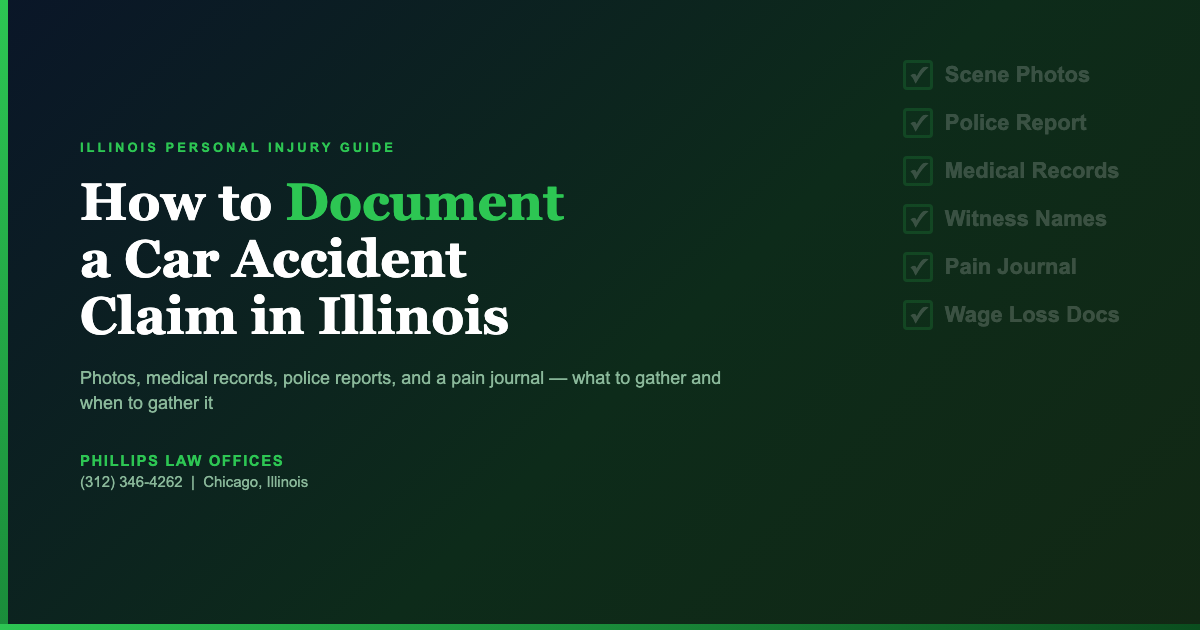
How to Document a Car Accident Claim in Illinois
The strength of an Illinois car accident claim is almost entirely built on documentation. What Illinois law says and how to protect your case.
-

Lane Change Accident Claims in Chicago — Fault, Evidence, and Recovery
Lane change accidents in Chicago are often the fault of the driver who moved out of their lane , Illinois law places a legal duty on…
-
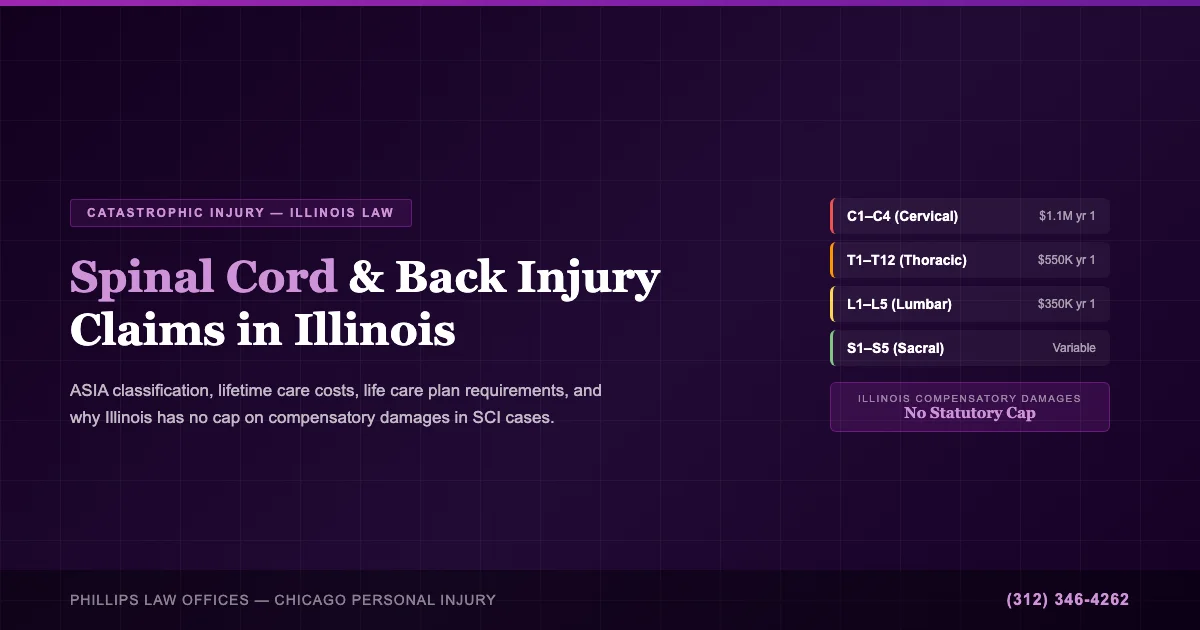
Spinal Cord and Back Injury Claims in Illinois
Spinal cord injuries are among the most costly and life-altering outcomes of Illinois accidents. Complete and incomplete SCIs carry lifetime care costs in the millions. Illinois…
-

Chicago Slip and Fall Claims: Proving Property Owner Negligence
Chicago slip and fall claims require proving that a property owner knew or should have known about a hazardous condition and failed to fix it. Illinois…
-
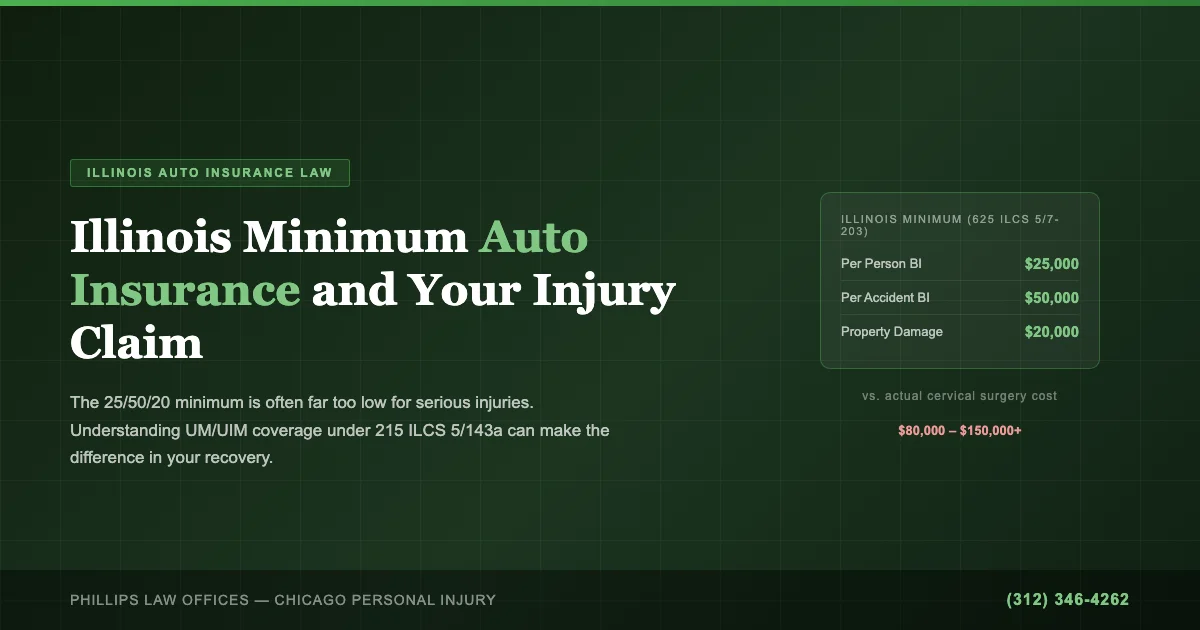
Illinois Minimum Auto Insurance and What It Means for Your Injury Claim
Illinois requires minimum auto insurance of 25/50/20 — $25,000 per person, $50,000 per accident for bodily injury, and $20,000 for property damage. These minimums are often…
-
Using Dashcam Footage in a Chicago Car Accident Claim
Dashcam footage is among the strongest evidence in a Chicago car accident claim — it shows speed, lane position, traffic signals, and driver behavior in real…
-

Elevator and Escalator Accident Claims in Chicago
Elevator and escalator injuries in Chicago involve building owners, maintenance contractors, and in some cases the manufacturer under product liability law. The Illinois Elevator Safety Act…
-
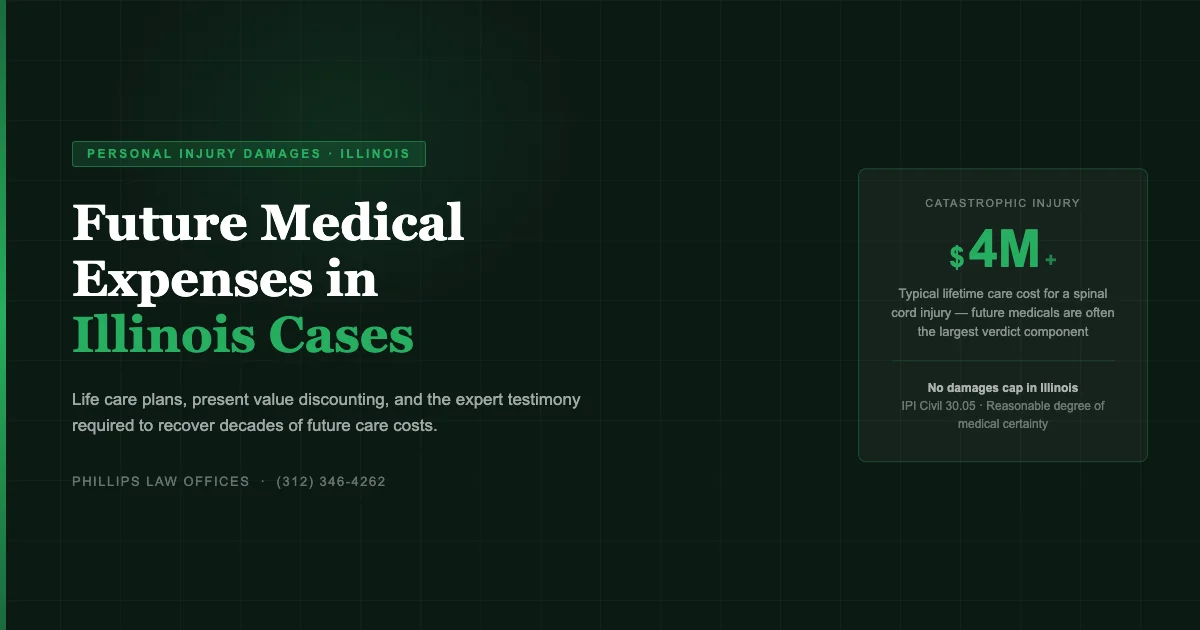
Future Medical Expenses in Illinois Personal Injury Cases
Future medical expenses are recoverable in Illinois personal injury cases when proven to a reasonable degree of medical certainty. They must be supported by expert testimony,…