
Tag: Cook County personal injury
-
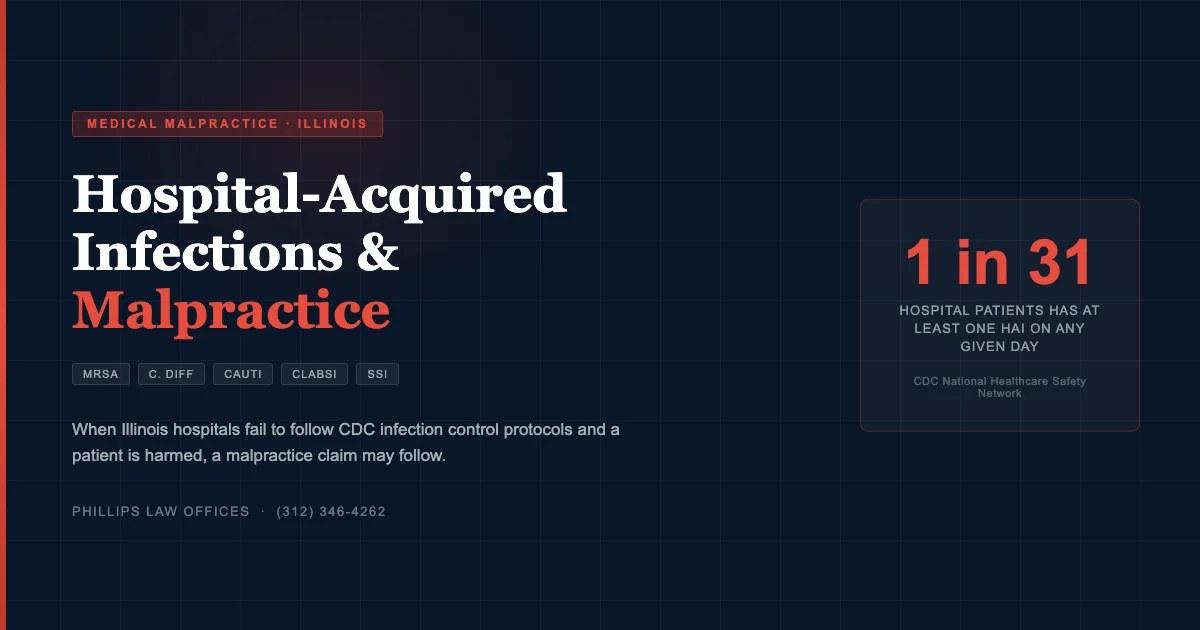
Hospital-Acquired Infections and Medical Malpractice in Illinois
Hospital-acquired infections (HAIs) — MRSA, C. difficile, CLABSI, CAUTI, and surgical site infections — are largely preventable under established infection control protocols. When an Illinois hospital…
-

Swimming Pool Drowning and Injury Claims in Chicago
Swimming pool drowning and near-drowning cases in Illinois involve hotel pools, condominium associations, park district facilities, and private homeowners. The duty of care depends on who…
-
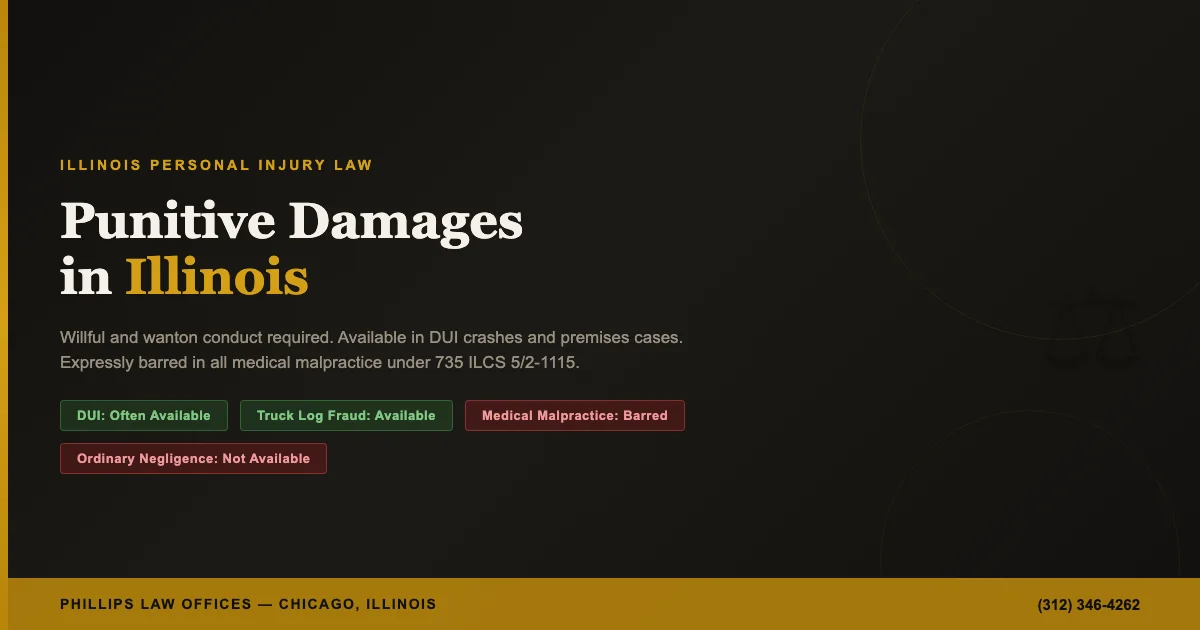
Punitive Damages in Illinois Personal Injury Cases
Punitive damages in Illinois require more than negligence — the defendant’s conduct must be willful and wanton. They are available in car accident and premises cases…
-
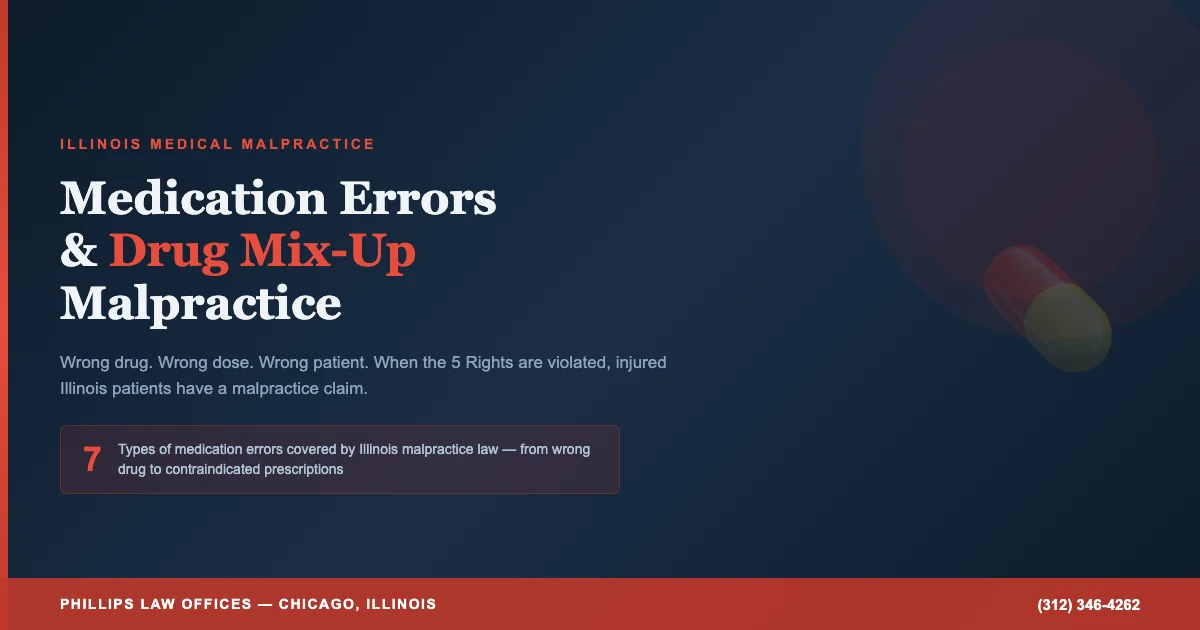
Medication Errors and Drug Mix-Up Malpractice in Illinois
Medication errors — wrong drug, wrong dose, wrong patient, or dangerous drug interactions — are a leading cause of preventable hospital harm in Illinois. When a…
-

Stairway and Staircase Fall Claims in Chicago Buildings
Stairway falls in Chicago apartment buildings, offices, and commercial properties are among the most severe premises liability cases. Proving liability requires showing the property owner knew…
-
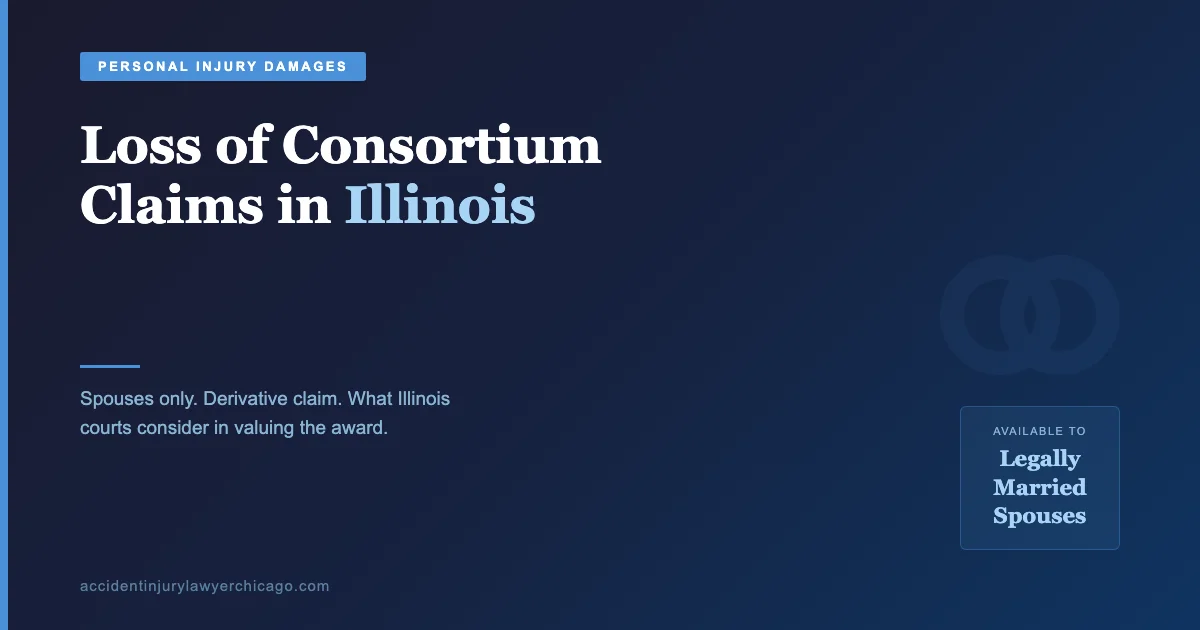
Loss of Consortium Claims in Illinois Personal Injury Cases
Loss of consortium is a separate damages claim available to the spouse of a seriously injured person in Illinois. It compensates for loss of companionship, affection,…
-
ER Errors and Emergency Room Malpractice in Illinois
Emergency room errors cause serious harm because patients are vulnerable and decisions are made fast. In Illinois, ER malpractice claims require proving the provider deviated from…
-

How Are Wrongful Death Damages Distributed in Illinois?
In Illinois, wrongful death proceeds go to the deceased’s spouse and next of kin, proportioned to their pecuniary losses. The distribution is not governed by the…
-
Are Illinois Personal Injury Settlements Taxable?
Most Illinois personal injury settlement proceeds are not taxable income under federal or Illinois law. But punitive damages, emotional distress unconnected to physical injury, and lost…
-
Birth Injury vs. Birth Defect: The Legal Distinction in Illinois
A birth injury results from medical negligence during labor and delivery. A birth defect is a congenital condition that developed before birth. The distinction determines whether…